Log Post: Unidentified Strange Object

Dr. Lam Nguyen-Ngoc leans over his microscope. He is soon joined by fellow marine planktonist Hai Doan-Nhu, and they both smile. The news spreads fast and soon most of the scientific team pays a visit to their workstation in R/V Falkor’s dry lab. No matter how many times they have to load the images again, they … Continued
Person: Thoi Chi Nguyen

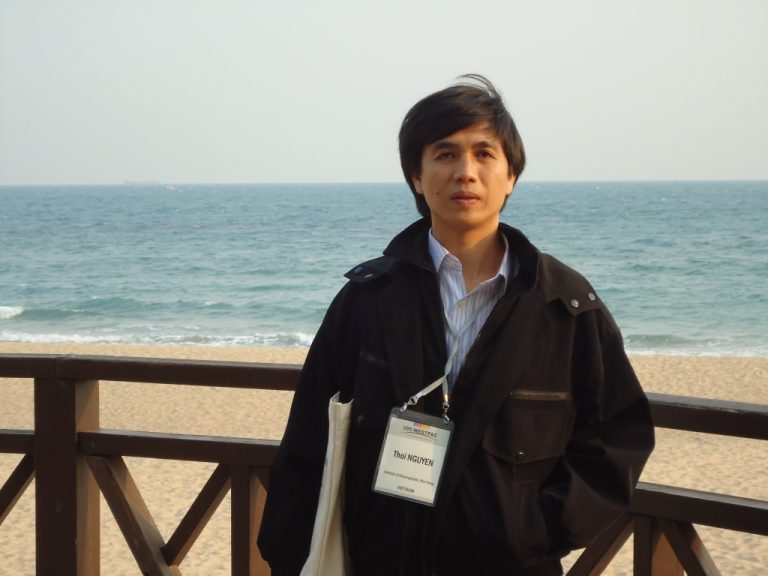
Thoi NGUYEN completed his biology bachelor degree in 2005 and ecology Master’s degree in 2008 from the University of Natural Science, Ho Chi Minh city, Vietnam. Following his degrees, Thoi began work in March 2009 at the Department of Marine Plankton, Institute of Oceanography (Vietnam Academy of Science and Technology). Thoi works in ecology of … Continued

Page: 4500 m Remotely Operated Vehicle (ROV SuBastian)

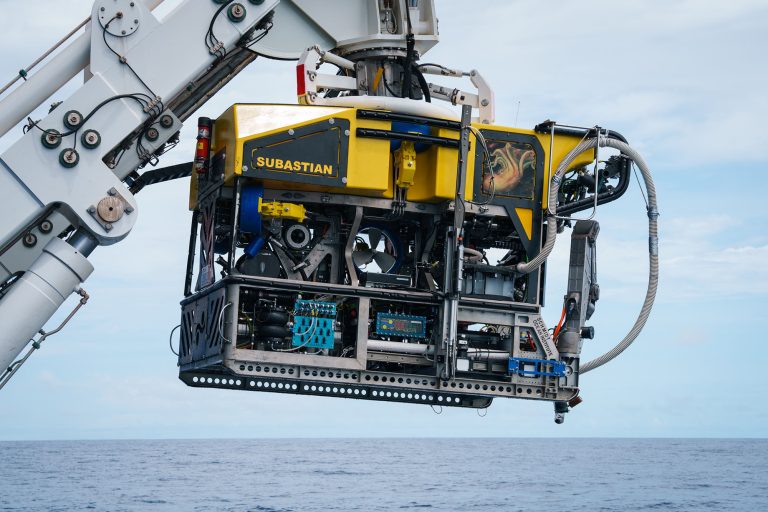
Our underwater robotic research program includes a Remotely Operated Vehicle (ROV SuBastian) depth rated to 4,500 meters with research capabilities for use on R/V Falkor (too). The ROV is outfitted with a suite of sensors and scientific equipment to support scientific data and sample collection, as well as interactive research, experimentation, and technology development. ROV Frequently … Continued

Person: Melanie Abecassis

Melanie is a research analyst from the Joint Institute for Marine and Atmospheric Research of the University of Hawai’I, and works at the Pacific Islands Fisheries Science Center. Her research primarily focuses on habitat modeling for various pelagic species using data from satellite tags deployed on animals. She has a Ph.D. in marine ecology from the … Continued

Person: Dara Tebo

Dara Tebo is a REMUS AUV Operator in the Ocean Systems Laboratory (OSL) at WHOI.  Dara started at WHOI in 2007 working in the Rigging Shop where she fabricated and tested mooring components and established procedures for testing wire used on the UNOLS Fleet.  She has gone to sea with several groups at WHOI deploying … Continued

Cruise: Trans-Atlantic Shakedown

This cruise is a part of the shakedown phase of the R/V Falkor initial science operations. During shakedown, all of the systems and oceanographic instruments on board the ship will be tested and calibrated. The ship’s layout and functionality will be evaluated against the needs of future scientific expeditions.

Cruise: Tracking the Tasman Sea’s Hidden Tide

The first ever comprehensive study of the largest, most focused internal tide on the planet, which moves across the Tasman Sea each day. During this expedition, researchers will amass data that will improve general understanding of the phenomenon, as well as the ability to incorporate internal tide effects accurately in climate models.

Cruise: Mixing Up the Tropical Pacific

Research suggests that small-scale turbulence could play a large role in how the ocean absorbs heat, a key factor in the onset of El Niño events. In July, Falkor traveled to the central equatorial Pacific to give researchers a first view of this smaller scale turbulence.