Cruise: Hydrothermal Exploration of the Mid-Cayman Rise
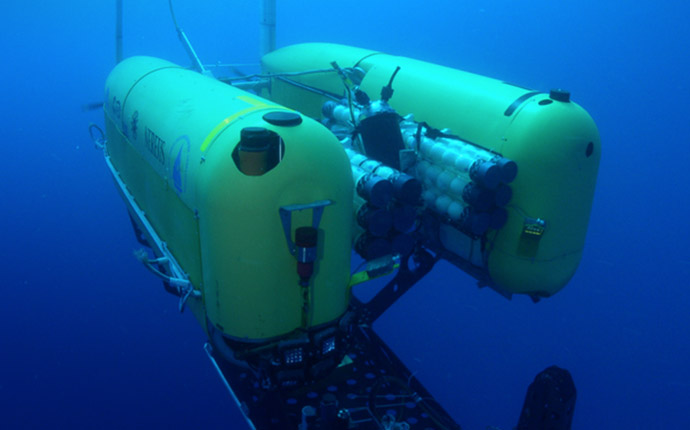
In June of 2013, R/V Falkor will be using the hybrid underwater robotic vehicle Nereus, to explore the depths of the Mid-Cayman Rise, which reaches more than 6,500 meters (~4 miles)
Search Results for CTD
In June of 2013, R/V Falkor will be using the hybrid underwater robotic vehicle Nereus, to explore the depths of the Mid-Cayman Rise, which reaches more than 6,500 meters (~4 miles)
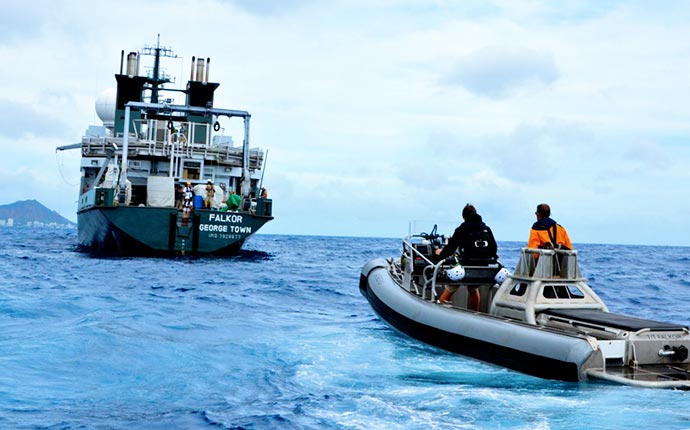
Since 1988, oceanographers have been studying a patch of deep blue 60 miles north of Oahu known as Station ALOHA. But despite extensive work there, much remains unknown about the diversity of the area’s zooplankton.
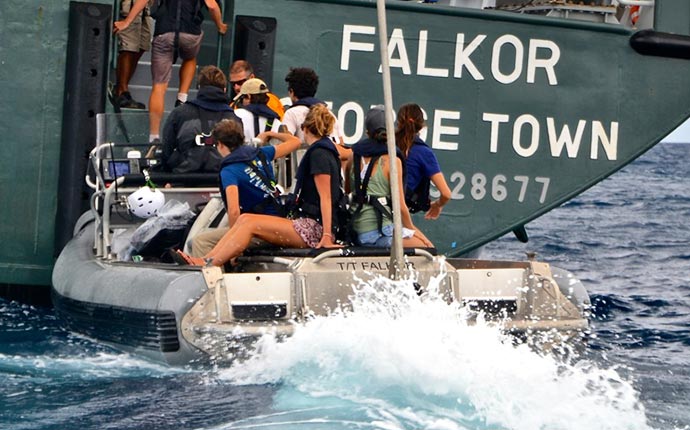
The focus was on inspiring student participants to move toward careers in ocean science, and for those already headed that direction, to provide much needed training for future expeditions.
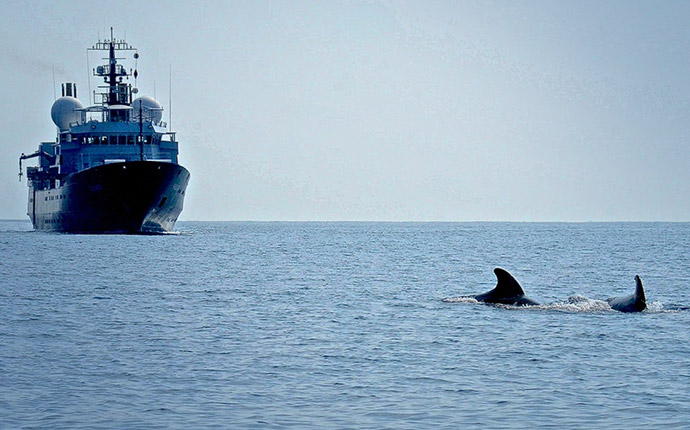
On the first of three student cruises, the team aboard Falkor answered questions about whales’ decision-making process about how and where whales feed in the deep sea.
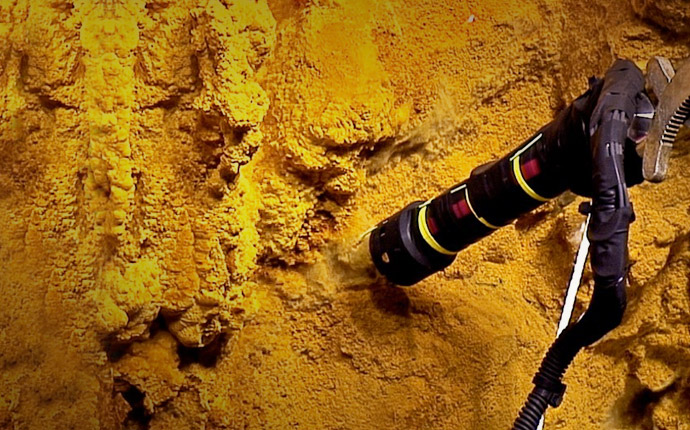
AUV Sentry will be used at Hawaii’s underwater volcano, Loihi Seamount, whose base remains largely unexplored. The team will survey and sample the seamount to better understand the dispersion of hydrothermal fluids from Loihi to the Pacific Ocean.
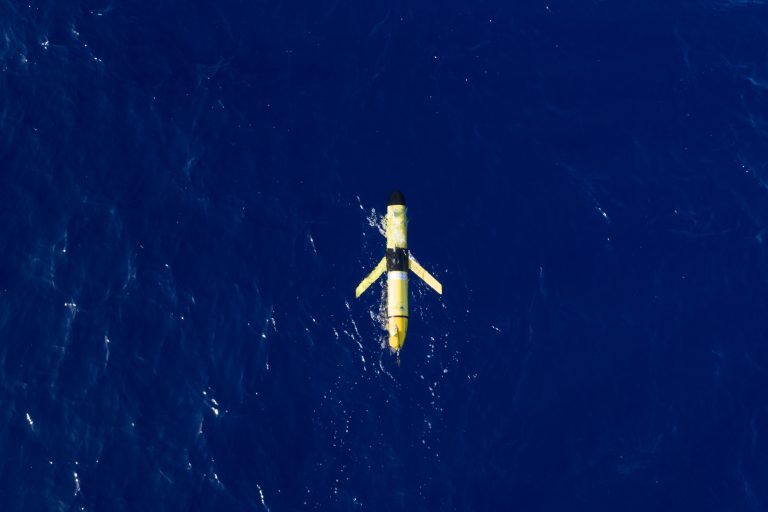
9 August - 2 September 2026 #SaltyStaircases In the northwestern equatorial Atlantic, the water column is highly stratified, with warm, salty water sitting atop cooler, fresher, nutrient-rich waters carried northward from the Antarctic by the Atlantic Meridional Overturning Circulation (AMOC). These conditions make the region a hotspot for salt finger mixing, a fine-scale process in … Continued
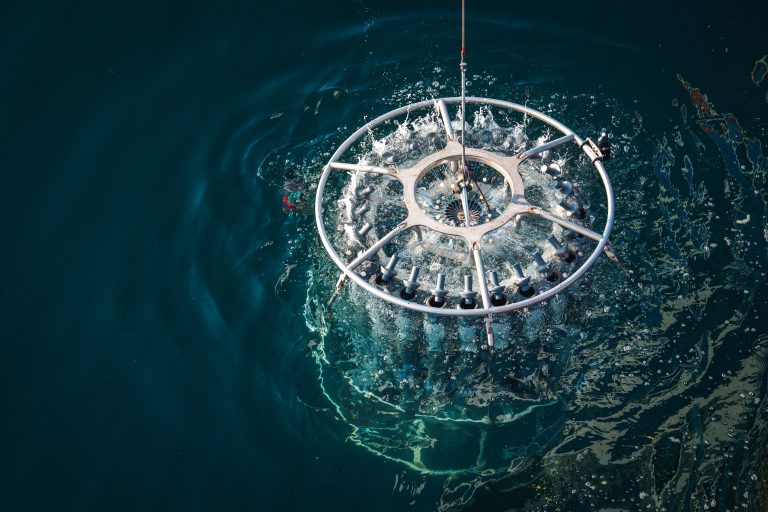
The subtropical ocean gyres are thousands of kilometers in diameter, with an average depth exceeding 4,000 meters, making them one of Earth’s largest continuous biomes. Gyres are large, permanent circular current systems primarily driven by Earth’s global wind patterns and its rotation, and are found in each major ocean basin. While often deprived of nutrients, it is estimated that 20% of the ocean’s primary productivity occurs in the subtropical gyres, and these ecosystems may account for up to half of the global ocean carbon export to the deep sea. Understanding their biogeochemistry is required to develop a more accurate understanding of how climate change is impacting the global Ocean.
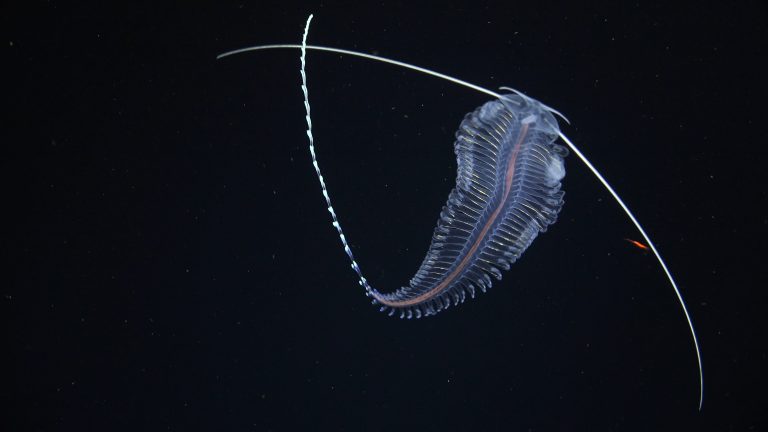
19 January - 22 February 2026 #LivingBioreactors Each night in the open ocean, hundreds of millions of tons of fish, shrimps, jellies, and other animals rise from the deep to feed near the surface. Then, at dawn, they descend hundreds of meters to avoid predators. This is the largest animal migration on Earth, and a … Continued
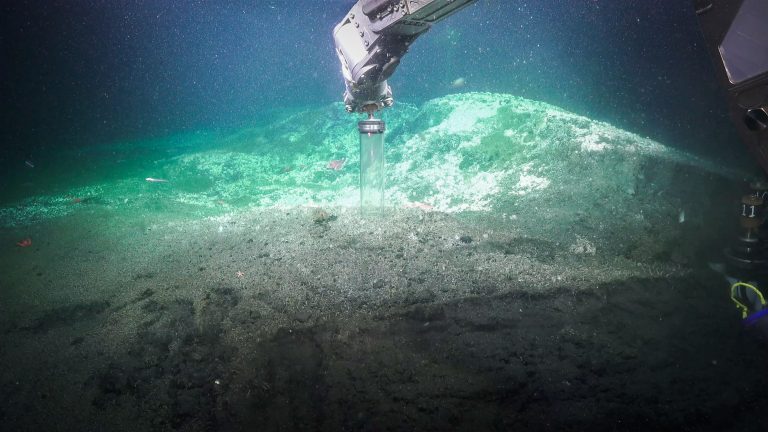
Almost all visible life on Earth is eukaryotic. Trees, fish, humans, kelp, flowers, and mushrooms all share one thing: they are built from eukaryotic cells. Unlike prokaryotic cells, eukaryotic cells contain a nucleus and mitochondria, the powerhouses that facilitate cellular functions such as eating, breathing, and physical appearance. Yet, where and how the first eukaryote came into existence is still one of biology’s greatest unknowns. Dr. Brett Baker, of the University of Texas at Austin, and an international team of scientists are working to resolve this mystery.
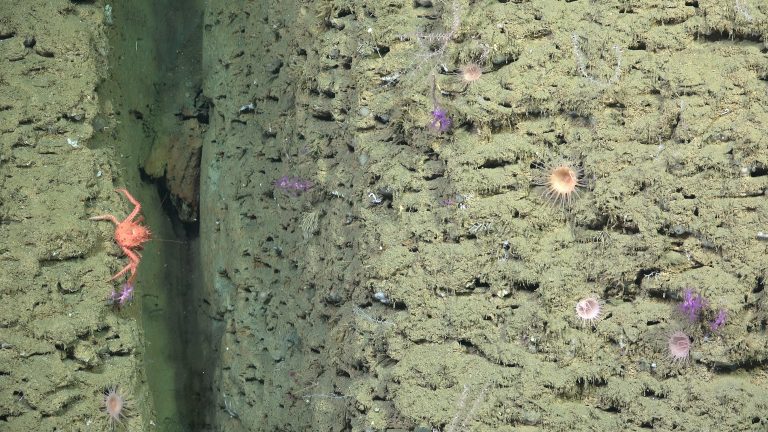
The Malvinas Current offshore of Argentina — a branch of the Antarctic Circumpolar Current — carries nutrients and cold water from the south, boosting primary productivity in the Southwest Atlantic Ocean. Underwater canyons along Argentina’s continental slope create irregularities in the seafloor that could change the path of this powerful current, facilitating an exchange of water masses between the shelf and the open Ocean. Scientists hypothesize that, as a consequence of this dynamic, massive phytoplankton blooms and biodiversity hotspots are present near the canyon heads in these waters.