Log Post: Lars & the Real Gannet

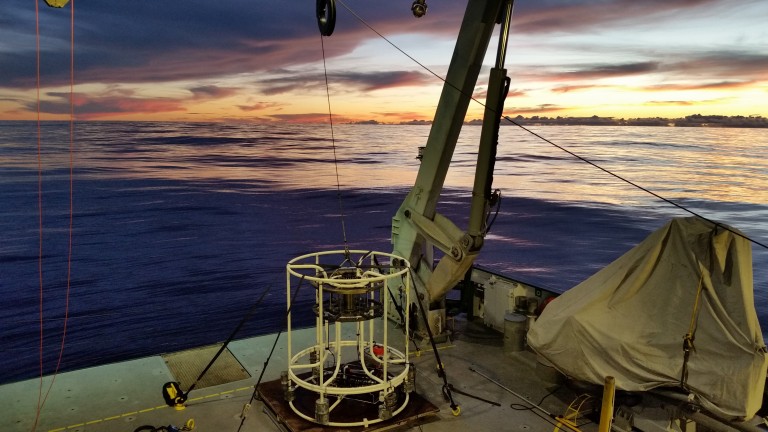
Another good day today.  I was up at 5am to join in with a CTD cast designed to land right over the hottest chimneys that we had mapped out at the Piccard hydrothermal field in 2012: at the Beebe Vents mound. To avoid unnecessary wear and tear on the engines we avoided using our Dynamic … Continued
Log Post: Backstage

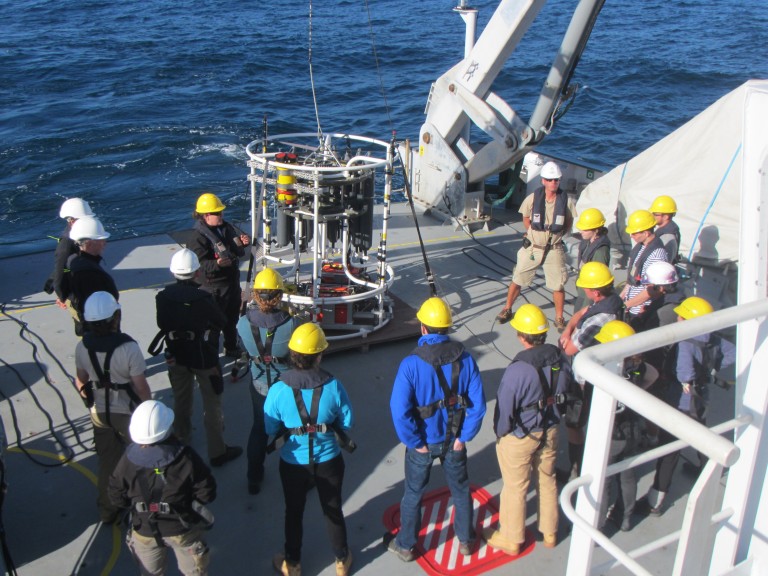
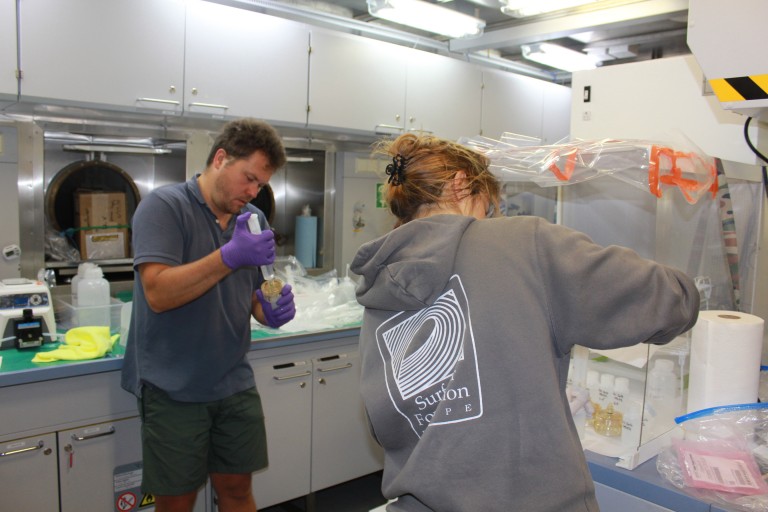
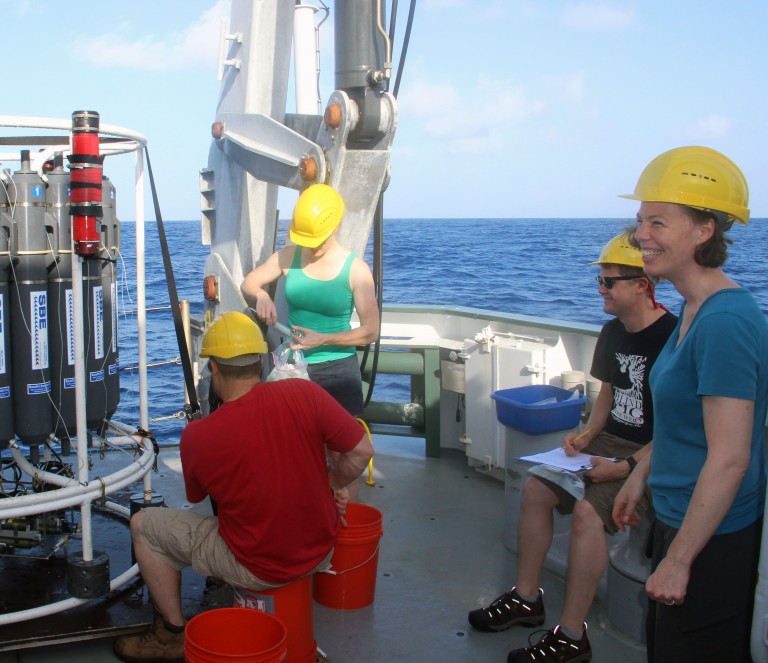
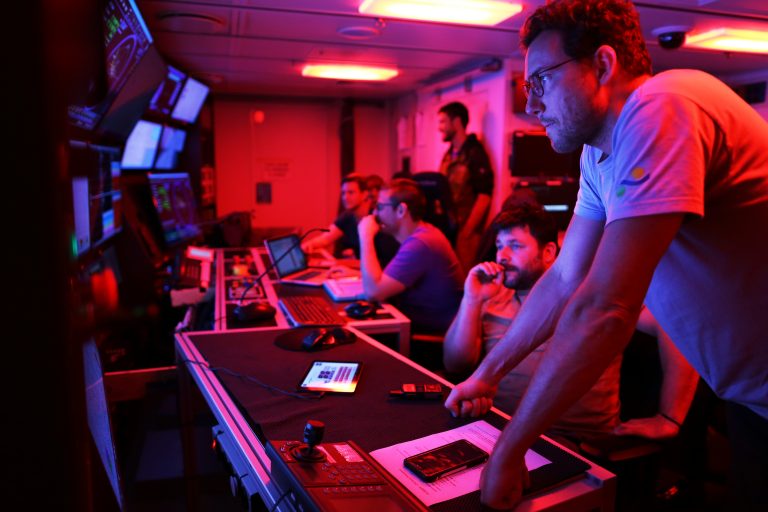
As the CTD rises out of the water, we line up in the hallway, donning life jackets and ensuring all of our bottles are properly labeled and ready for samples. We watch Lead Marine Technician Leighton Rolley secure the CTD and wait for the signal that it is safe for us to enter the starboard … Continued

Log Post: Colored Lines – Decyphering the CTD Code

The science team onboard Falkor are deploying CTDs during the voyage to determine physical, chemical, and biological properties of the water column. This information is used to calculate accurate water depths for our multibeam echosounder data and also characterizes the water masses in our study region. For example, between Pohnpei and the two atolls, we … Continued

Log Post: Using the CTD to Calibrate the Multibeam Sonar

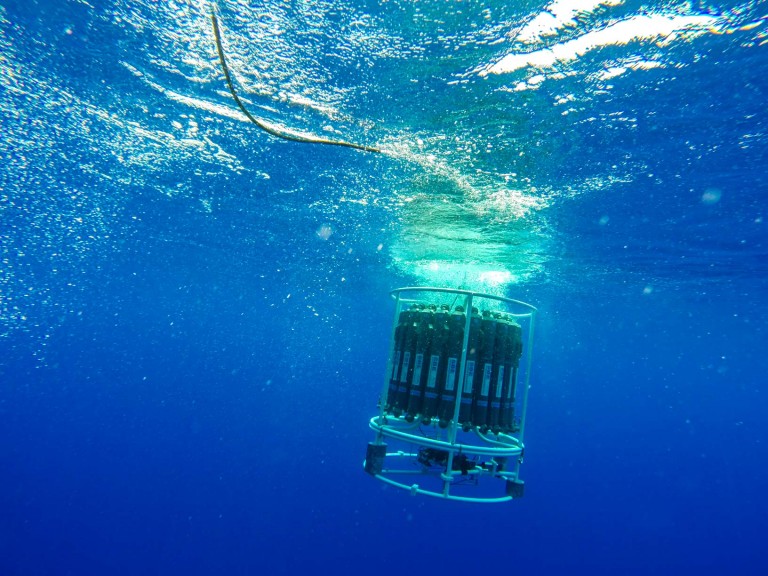
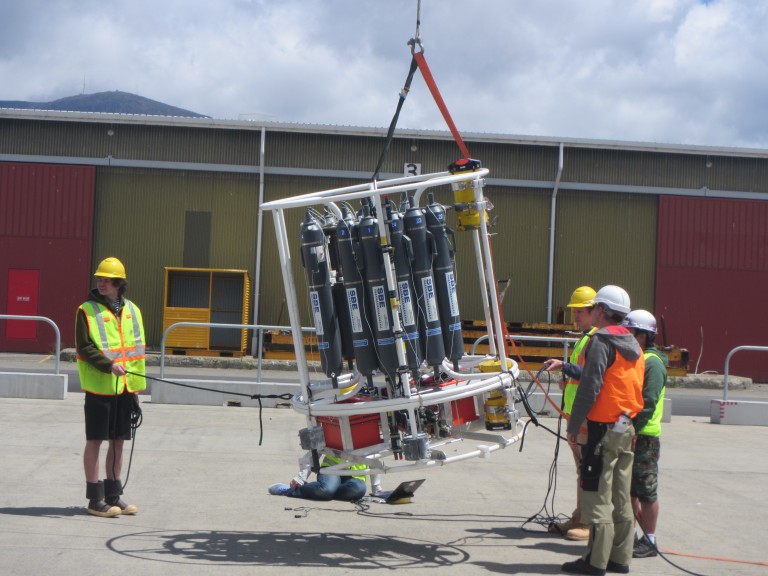
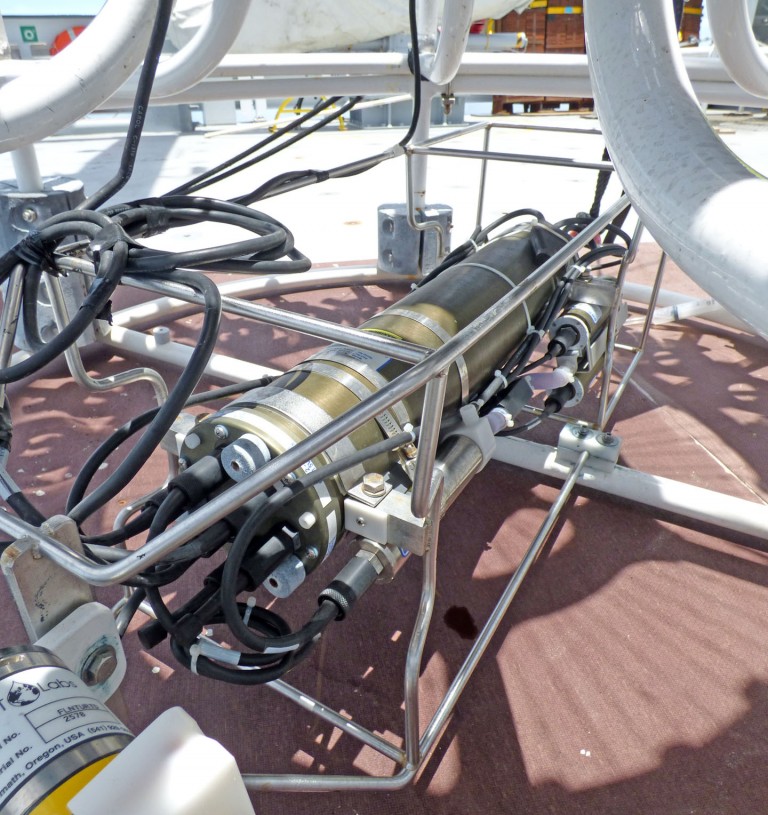
We have arrived at the Ontong Java Plateau and to properly map the seafloor we needed to know more about the physical characteristics of the water above it. To do this, the science crew typically deploy a CTD rosette (array). CTD stands for conductivity, temperature, and depth. Since the electrical conductivity of water relates directly … Continued

Log Post: Making Time for the Time Series

The Mixing Up the Tropical Pacific cruise is focused on obtaining data that reveals small-scale mixing in the central equatorial Pacific. To do this, the team is creating a time series using relatively shallow (500m) CTD and LADCP casts. These instruments are deployed every three hours to capture temporal changes in temperature, salinity, and current magnitude/direction. … Continued

Log Post: CTD’s Away!

Our first day of sailing consisted of voyage preparation. This included tying everything down and expecting the worst sea conditions.

Log Post: High-Tech Sensors Prepared to Study Sea Surface Microlayer in Fiji

While mapping the gaps in existing high-resolution bathymetry around the Phoenix Islands Protected Area is the primary scientific objective on this transit from Hawaii to Fiji, R/V Falkor remains abuzz with other scientific activity. In preparation for Falkor’s next cruise in Fiji, Carson Witte, a PhD student in Ocean and Climate Physics at Columbia University’s Lamont-Doherty Earth Observatory, has been … Continued

Log Post: Ironing out hydrothermal plumes

We know that Loihi Seamount is affected by hydrothermal activity that can lead to giant plumes of rusty flecks in the water column and at the seafloor. Those marine particles form when hydrothermal iron is oxidized either by microorganisms (the “iron eaters” that poop rust) or by small amounts of oxygen dissolved in the deep … Continued

Log Post: Deep Water Chemistry

This morning, R/V Falkor stopped at a deep-water site on the way to the first dive site, Okeanos Ridge, in order to deploy a CTD-rosette. CTD stands for conductivity-temperature-depth sensor. The instrument derives salinity from conductivity, depth from pressure, and temperature from an electrical thermometer. The ‘rosette’ configuration has 24 bottles associated with it, called … Continued