Person: Jan Witting

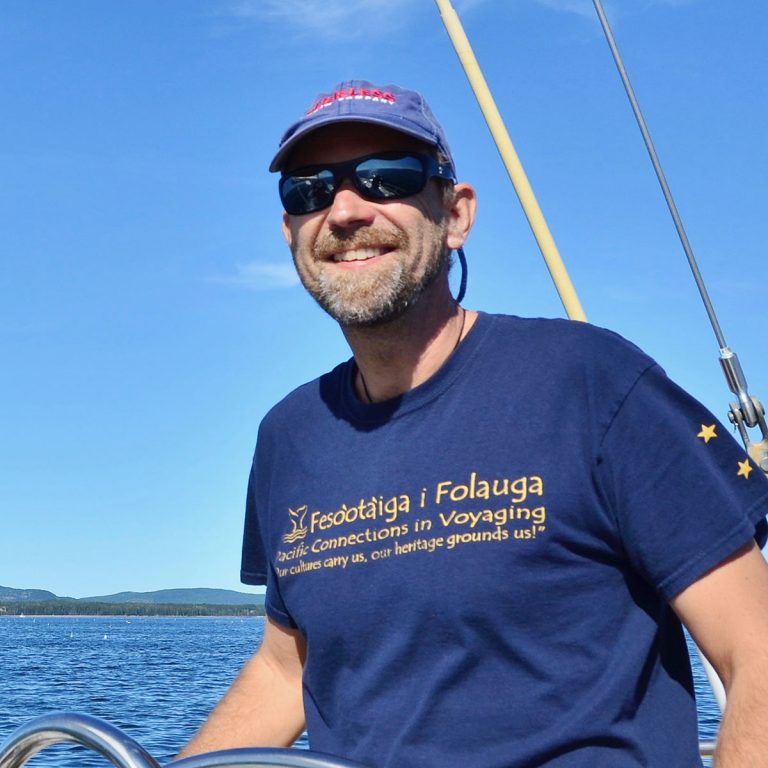
Jan Witting is a biological oceanographer with long-running interests in the Sub Tropical and Equatorial Pacific, where he has served as Chief Scientist on more than 20 research cruises. His work broadly addresses the linkage between climate variation, circulation, and biological production in the tropical and subtropical oceans, where he studies the effects of changing … Continued

Log Post: Characterizing Eddies

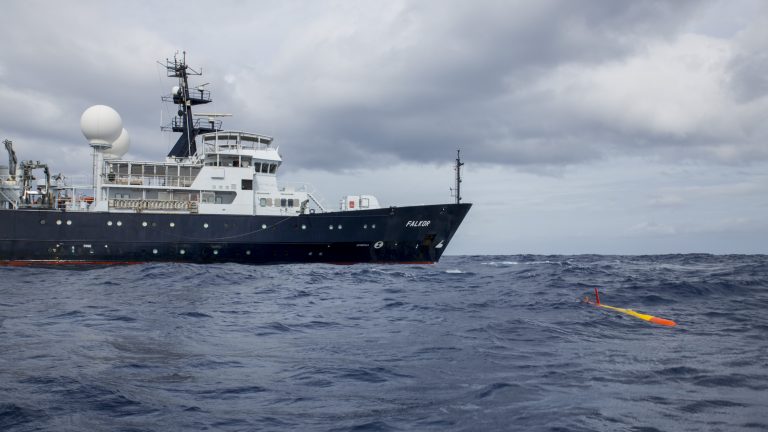
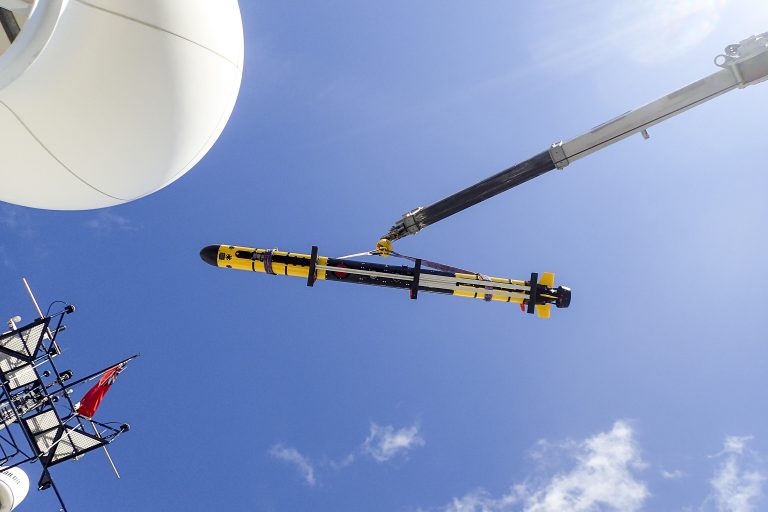
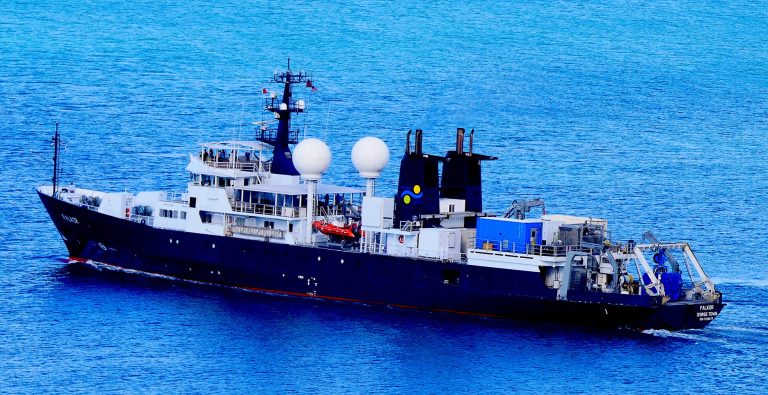
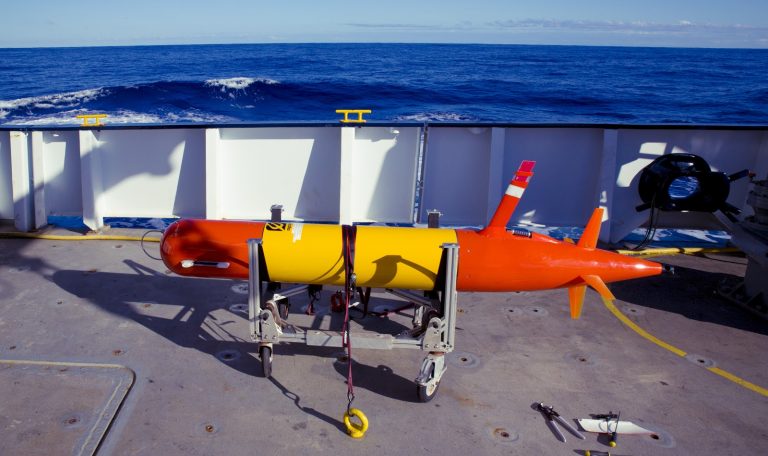
From the heart of the cyclonic eddy, we turned the Falkor north and cruised to its edge. We found the counterclockwise spinning cyclonic eddy. Now it is time to characterize the eddy’s physical, chemical, and biological features, which means it is time to get the LRAUVs (#MicrobeEddyBots) into the ocean and put them to work. … Continued

Log Post: Backstage

“The first problem we had is that the vehicle wasn’t communicating with the ship’s USBL system, so we weren’t able to keep track of where the Iver was underwater,” says Nick Goumas. “That made the mission very high risk. So we decided we were confident running a simple compass calibration mission, which is when the … Continued

Person: Anna Romano

Anna is a Research Associate at the University of Hawai‘i, Mānoa, working in the laboratory of Dr. Edward DeLong. She joined the team to spearhead developing high throughput workflows using robotics to prepare marine microbial and marine sediment trap samples for genetic sequencing. In addition to her laboratory role, she joined the UH/MBARI LRAUV collaboration … Continued

Log Post: An Ocean of Opportunity: Appreciation and Reflection

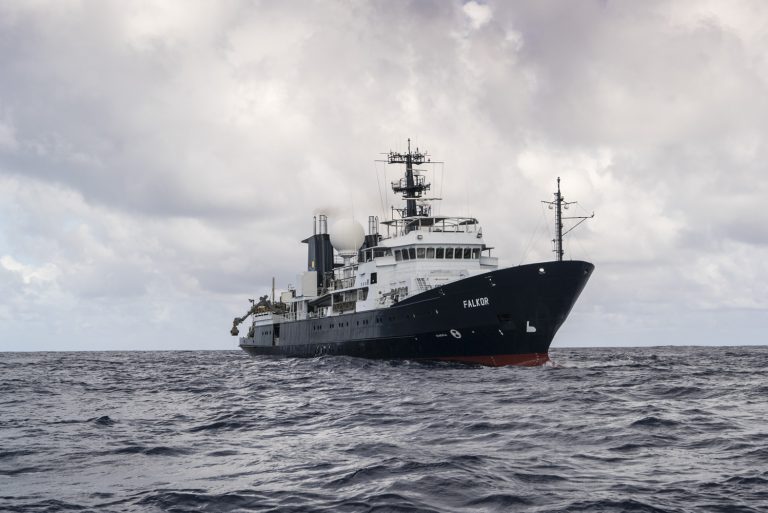
As my time on board the R/V Falkor has drawn to a close, I look back and reflect on how truly amazing and wonderful this experience was. When I first stepped on board, I was not sure what to expect. Having never been on a research vessel before, this was a completely new experience for … Continued

Log Post: Rocking Around

The swell seems invisible, but is clearly revealed by Falkor’s rocking and rolling. It represents no challenge for the experienced crew and by the end of the day, ROV SuBastian is safely back on the aft deck after twelve hours of exploring the sea bottom. While the cloudscape glows a beautiful purple and orange tint, … Continued

Log Post: Our First Discovery!

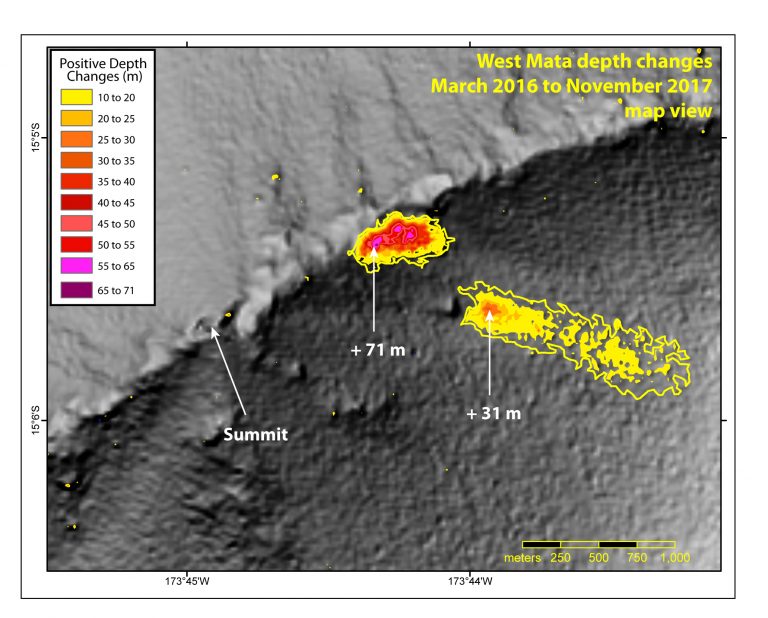
One of the first things we did once we arrived at West Mata volcano was resurvey the seamount with R/V Falkor’s multibeam sonar system. We knew from previous repeated bathymetric surveys that West Mata has had frequent eruptions during the last decade, as we shared in our last blog. The last survey was in March 2016, so … Continued

Log Post: A Changing Landscape

West Mata is a Restless Volcano. West Mata Seamount is one of only two submarine volcanoes in the world where an active eruption has been directly observed on the seafloor. An expedition in November 2008 discovered evidence that West Mata was actively erupting while exploring the water column in the area for hydrothermal plumes – but the … Continued

Page: How We Study the Ocean

A brief overview of the instruments oceanographers use at sea, including sea floor mapping with multibeam echosounder, chemical sensors on UAVs, and CTD casts for water samples. Come see inside our wet and dry laboratories, and check out some the Autonomous Underwater Vehicles we’ve worked with. Lastly, meet ROV SuBastian, Schmidt Ocean Institute’s Remotely Operated … Continued