Log Post: A Dive with SuBastian

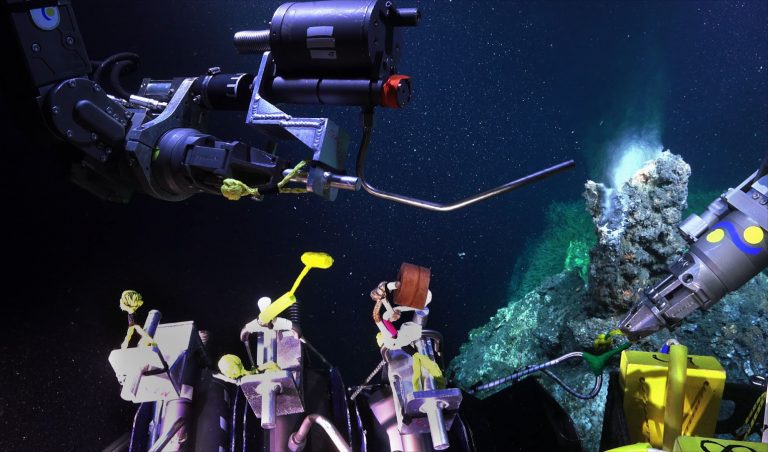
ROV SuBastian, the Research Vessel Falkor’s Remotely Operated Vehicle, is designed for the efficient collection of scientific data at depths up to 4500m. The yellow robot is currently being used to understand the similarities and differences across large features of the deep sea. Recently, researchers have asked, are the communities on either end more similar … Continued
Page: ROV Dives – Necker Ridge: Bridge or Barrier?

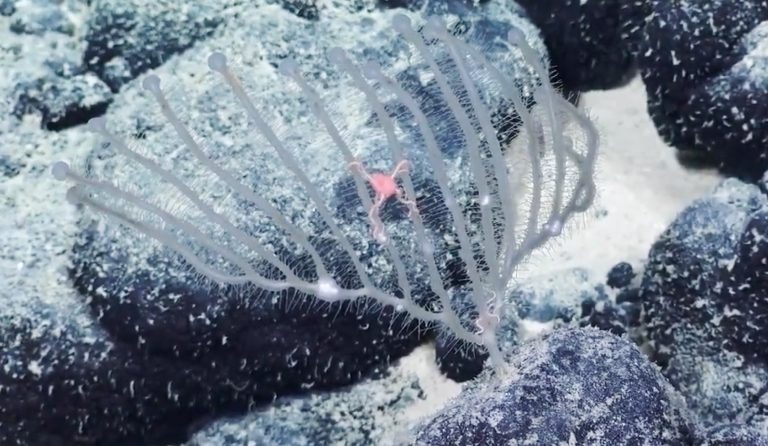
Led by Dr. Amy Baco-Taylor from Florida State University, the science team will aim to gain insight into central and western Pacific (CWP) seamount lifeforms and distribution, while examining the role of Necker Ridge as a stepping-stone (or blockade) to other parts of the Pacific. They will gather imagery and samples of the seafloor biology … Continued

Log Post: What does it take to measure iron in the ocean

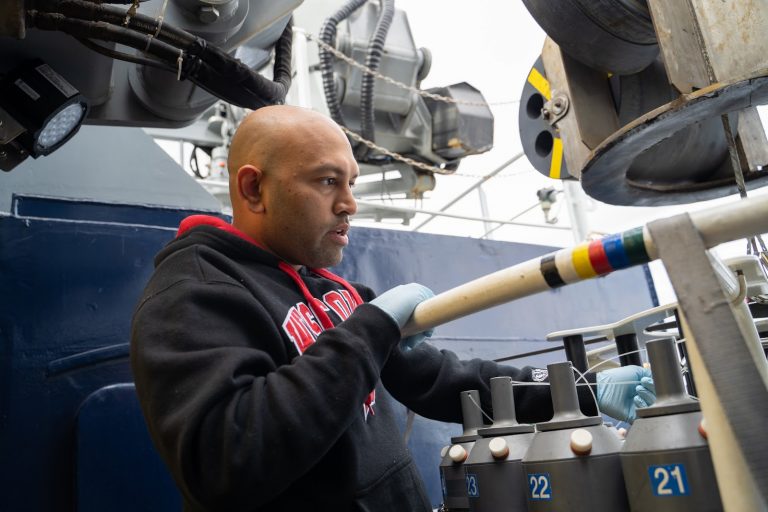
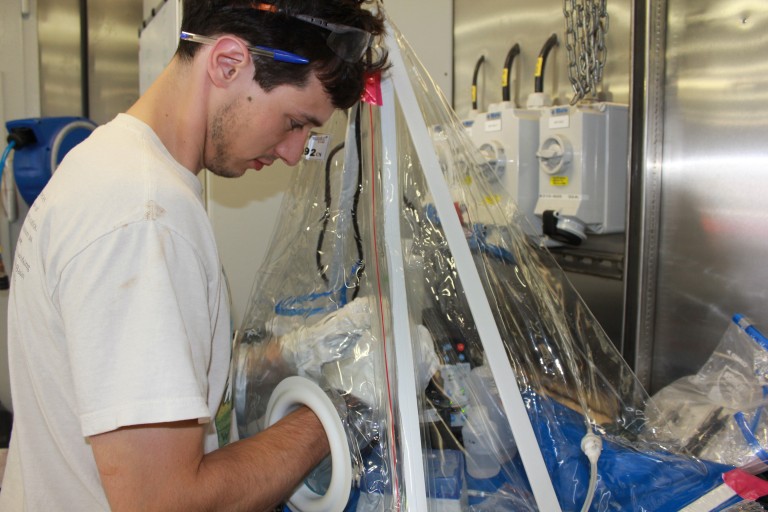
What does it take to measure iron in the ocean? The science crew of the R/V Falkor are intimately familiar with this question. The concentrations of iron at Loihi seamount are quite high for ocean water, but in actuality, they are extremely low –equating to a drop of water in an Olympic-sized swimming pool! However, … Continued

Log Post: The Heart of Falkor

Most of the time when you tour a ship you see the main areas where the science gets done, the aft deck, wet lab, control room, but have you ever thought about what powers all these amazing technologies? I didn’t until recently, when I was graciously offered a tour of the engine room, also known … Continued

Log Post: Loihi Seamount – Ironed Out

Like all good things, the Loihi Seamount excursion has come to an end. Close to two weeks onboard the R/V Falkor, and our science crew is leaving with enough data to keep them busy for the next six months. All in all, we had seven AUV Sentry deployments to the two deep regions of Loihi … Continued

Log Post: Crashing a Microbial and Viral Party in the Deep Sea

The deep sea is a hostile environment to most life. There is little by the way of food or other resources. To make matters worse, no light reaches the depths of the oceans. Amidst this darkness exist hot spots of chemical activity in the ocean bed known as hydrothermal vents, fertilizing the oceans with chemicals … Continued

Log Post: Underway

After a very long and unanticipated delay, we are underway and headed towards the Guaymas Basin, located in middle of the Gulf of California. The Gulf of California, one of the most intriguing places I have worked, is home to deeply interesting and fascinating seafloor habitats. In this actively rifting, young ocean basin, the East … Continued

Page: Schmidt Ocean Institute 2019 Expeditions

Costa Rican Deep Sea Connections Puntarenas, Costa Rica January Dr. Erik Cordes, Temple University Dr. Erik Cordes and his interdisciplinary team will seek out deep sea communities to generate a three-dimensional profile of the methane seeps of Costa Rica. Diving off of the Isla del Cocos National Park, this research will help develop a proposal to expand … Continued

Log Post: Bubbles Found

As we steam towards San Francisco in rough seas, I am reminded how lucky we have been during our time on the Falkor with the weather, never losing any days to poor weather. Falkor really is the luck dragon! I have been at sea now for 27 days, and during this time we have deployed an … Continued

Log Post: Metals – Key Players in the Past, Present, and Future!

The Earth’s flow of energy – from animals, to plants, to microbes – is dictated by electron transfers: that is, moving electrons from one molecule or element to another in order to gain energy. These types of reactions have dictated the evolution of life on Earth. Photosynthesis is perhaps the most familiar such reaction, where … Continued