Log Post: Sharing the Passion

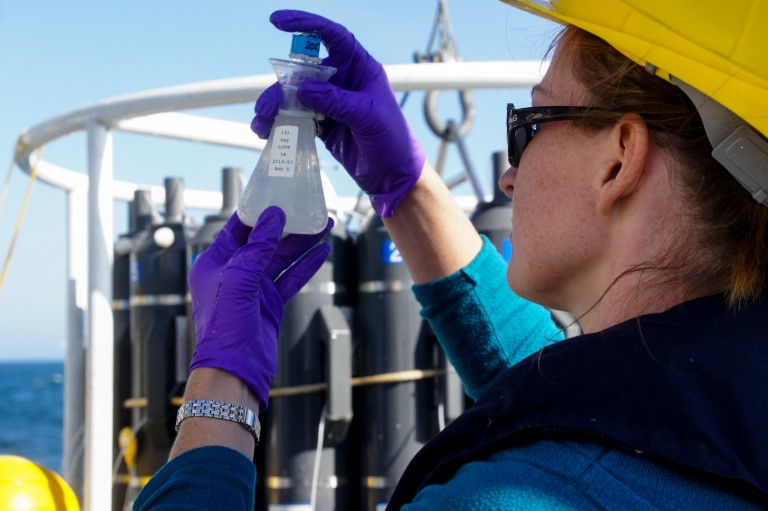
We will all be heading home in a day or two. Often the person that I sit beside on a plane will ask companionably where I’m headed or what I have been doing in the place I’m leaving.  Mostly my travels are related to work, so the next question is, “What kind of science do … Continued

Log Post: Where Are We, Where Are We Going

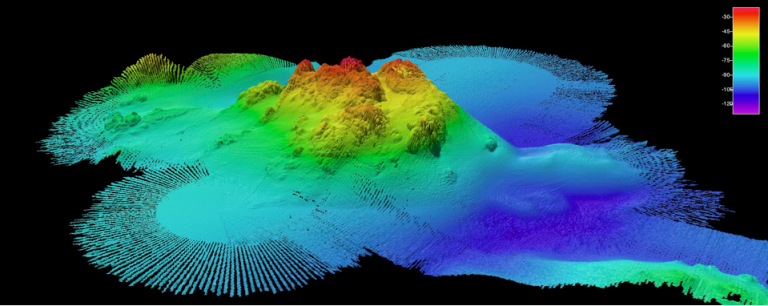
Marine Technician Jimbo (Paul Duncan) has spent all night, every night, for 24 nights keeping the Falkor’s multibeam sonar operational and recording data. The sonar sends “pings” of sound to the sea floor.  The pings bounce back.  The length of time between sending and receiving can be converted to depth.  Each pulse sends over 400 … Continued

Log Post: The Deepest Living Animals

The Sirena Deep: it’s 10,700 m (6.6 miles) deep and largely unexplored. Yesterday on the Falkor we successfully retrieved three landers from Sirena. The Rock Grabber had mud and water samples for studies on geology, microbes, nutrient cycling, and so on. The Wee Trap had another grabber with mud, and baited traps with animals. The hadal … Continued

Log Post: Who Cares

In this trench business we are often asked things like “what benefit does this have to society” and “who cares?”. Those who ask, “who cares?” should not be spending time reading blogs like these.  However, the answer to the former is two-fold: Why not explore it? First, there are still some fractions of society who … Continued

Log Post: Everything Including the Kitchen Sink (and Refrigerator)

Science at sea is not just science, but rather a cooperative effort between science, endurance, and creativity.  Imagine that you are going to be on a tiny floating island for a long time with whatever equipment you think to pack. It would be, and is, quite challenging trying to anticipate everything you will need, and … Continued

Log Post: Life at Sea – Are We Spoiled

Dry lab, wet lab, control room, garage, deck space, cold box, storage—I could easily write a story about the planning that went into making the Falkor a science-friendly ship.  The scientists love a ship that was designed for, well, science.  This however, is a story about the other side of the ship—the life at sea … Continued

Log Post: Survival in Mariana Trench

How would you survive if you were living in a cold dark place with limited food supply and tonnes of water above you? Well, that is the question that we are trying to answer while exploring the Mariana trench, the deepest place on Earth. In order to answer this question there are two key things … Continued

Log Post: What Happens when Food Reaches the Sea Floor

The challenges inherent to deep-sea biology can drive many a sane reasonable scientist to the verge of insanity.  These challenges include extended cruises of 30 days or more, the inability to know exactly what your instruments are doing on the sea floor, long hours that accompany 24-hour continuous operations, and the pressure that increases by … Continued

Log Post: Anatomy of a Lander

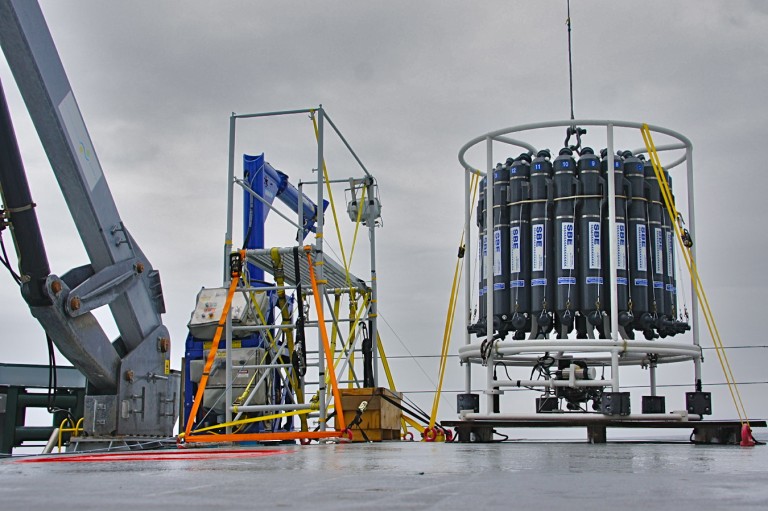
This expedition employs many pieces of equipment called landers. They can collect samples and provide a glimpse into the Hadal world. Landers are versatile tools for scientists that can range in complexity from simple baited animal traps to sensor equipped, computer controlled, mechanically inserted, precision coring samplers. Much like the scientists themselves, each lander is … Continued

Log Post: So, you want to go to sea – Part Two

Everyone loves a good sea story.  Part One, So You Want to go to Sea, was about the people who make them.  Part Two continues. Sergiusz Bachniak – Cadet Sergiusz, at 23, is the youngest member of the crew.  He is truly Living the Dream.  After high school in Poland, he began a four-year program of marine studies.  … Continued