Log Post: Setting Off to Explore Eddies

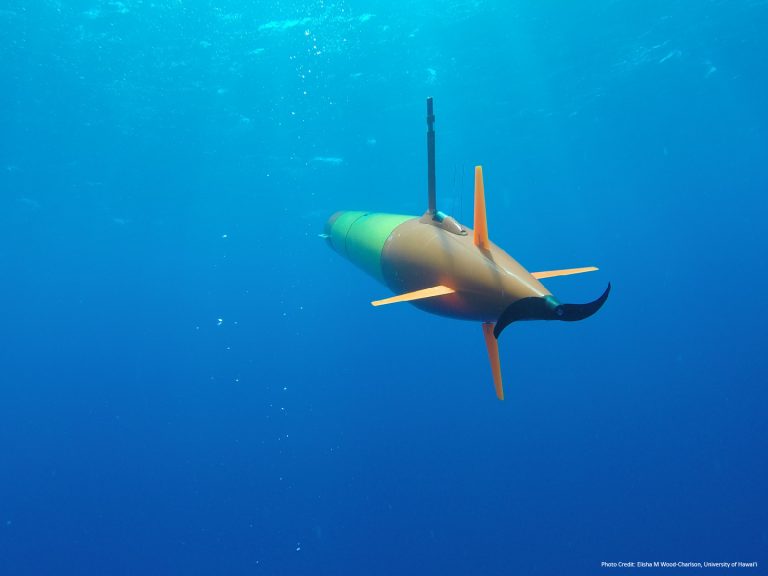
Aloha from the Pacific Ocean! For the next month, we will be using some amazing autonomous robots to explore an ocean eddy in never before seen detail. Eddies are large circular currents (10s-100s km) that can rotate clockwise (anticyclonic eddy) or counter-clockwise (cyclonic eddy) and are common features that occur in the North Pacific Subtropical … Continued
Log Post: Rollin’ in the Deep

This morning I was handed a small vial of water from the deepest reaches of the Tasman Sea (4800 meters deep, to be exact). So what, you ask?

Log Post: The Mission

The science party and crew aboard R/V Falkor arrived at the first of sixteen stations on the expedition. The team deployed their first CTD rosette to look at oxygen levels in the ocean. Scientists and marine technicians gathered around the visual matrix to try and guess the amount of dissolved oxygen to be found. Everybody … Continued

Log Post: Wee Little Bad Boys in the Deep

With no ROV dive, today was a time for filling in some gaps in the high-resolution seafloor mapping, and some sampling work launching equipment from the surface. In contrast to yesterday’s beautiful scenes at Baker Bank, one of the more interesting finds was something invisible to the naked eye and a good bit less pleasant. … Continued

Log Post: Cruise Summary for Deep Coral Shakedown

This was a shakedown to remember. It was the first time for many things aboard RV Falkor – the first time chased by a tropical storm in the Gulf of Mexico, the first time diving with a remotely operated vehicle (ROV), the first time mapping in rough weather, and the first time imaging corals in … Continued

Log Post: Falkor Encounters Signs of Warm, Salty Gulf Stream Current

As the R/V Falkor made its way south past the Grand Banks of Newfoundland this sunny, calm morning, Second/Third Officer Paul Shepherd overheard Chief Scientist Dr. Cabell Davis talking to researcher Melissa Patrician about the sea ahead, which had a slightly rusty reddish hue in relation to the blue sky. Throughout the Falkor’s maiden voyage … Continued

Log Post: Todo está Conectado

Perspectivas sobre la conectividad del área de estudio, a nivel regional, entre la columna de agua y el fondo marino, implicaciones para la gestión e investigación. English Translation Below “Todo está conectado”…. Una frase muy trillada que aplica de manera perfecta para lo que sucede en el océano, un medio que obedece las leyes de … Continued

Page: Lab & Work Areas

R/V Falkor (too) Standard Labs and Work Areas View our 3D tour Main LabThe 102 square meter main lab is the largest lab space and is for general dry lab use. Layout and Utilities Two -80 freezers (690 liters) Two -30C freezers (700 liters) One +4C refrigerator (700 liters) Two ductless fume hoods Five exhaust … Continued

Page: ROV Dives – In Search of Hydrothermal Lost Cities

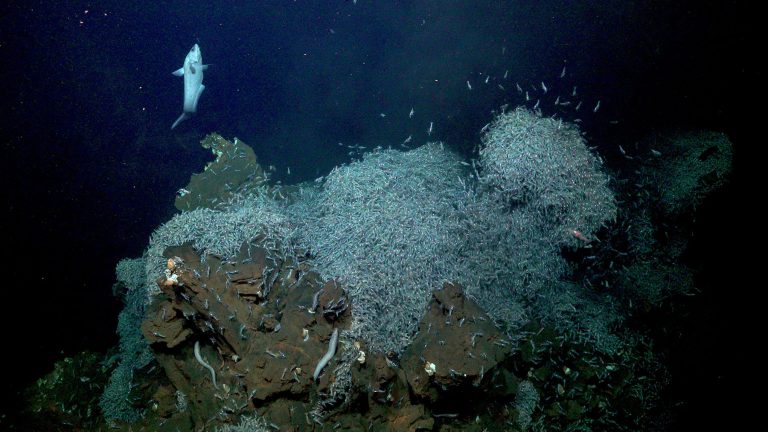
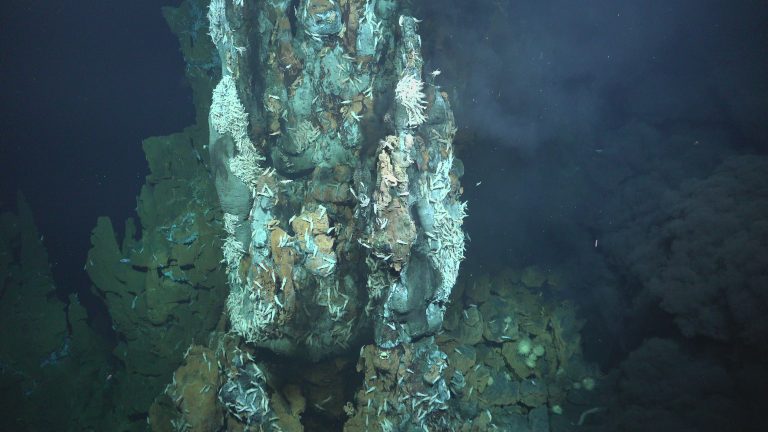
On its inaugural expedition, Falkor (too) will head to the Mid-Atlantic Ridge with Chief Scientist Dr. David Butterfield from the NOAA Pacific Marine Environmental Laboratory – University of Washington, and his team to search for hydrothermal lost cities. In 2000, scientists found a hydrothermal vent system on the Atlantis Massif unlike any seen before. Ghostly towers made … Continued

Log Post: Ahead by a Sentry

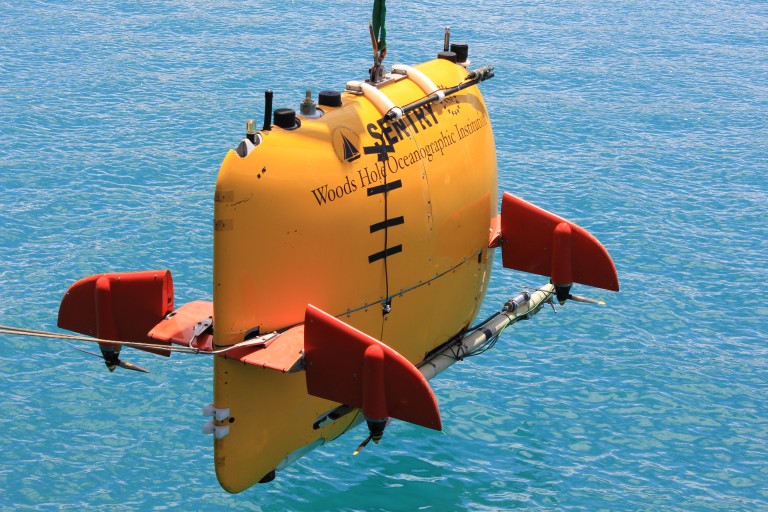
When you think about the amount of preparation needed for a cruise, the whole thing can make you exhausted. Months of planning, timelines, securing equipment and tools needed for the excursion, and science preparation, all play an important part of getting ready. . Checking and double checking is a critical piece of this preparation, as … Continued