Log Post: Maiden Voyages

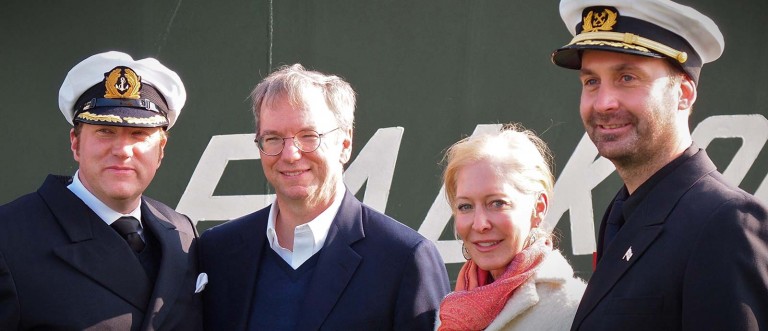
Melissa Omand, interdisciplinary physical oceanographer from the University of Rhode Island’s Graduate School of Oceanography, was confronted with a conflict: it was time for an upgrade to her phone, but creating more technological trash did not feel right. Plus, the camera on her older phone was fantastic. Together with her first graduate student Noah Walcutt, she worked on … Continued
Log Post: Microbes Run the Show

Researchers in the Dry Lab are able to examine the most recent Virtual Reality simulations created from holographic photos taken in each CTD cast. With this experience, it is clear that every single drop of water in the ocean contains huge amounts of life. Microscopic organisms constantly carry out processes that maintain the atmosphere, air, food webs, and life as we … Continued

Log Post: Sampling the Invisible

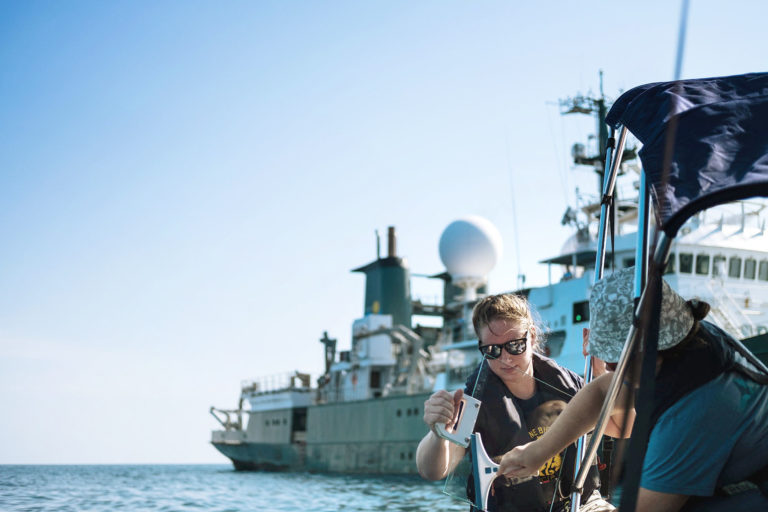
Microbes play many vital roles by physically and chemically changing their surroundings: they consume and produce a diverse range of organic and inorganic materials, provide food for other organisms, and drive biogeochemical cycles on a global scale. Our research in the Cunliffe Group based at the Marine Biological Association in Plymouth UK focuses on understanding … Continued

Log Post: With Bells On!

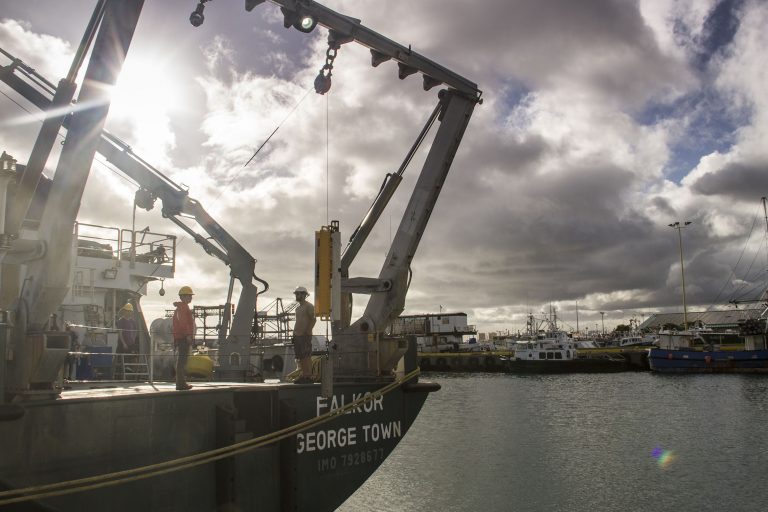
Mariana looks at the buoy drifting away from R/V Falkor. She has done it countless times before; but as she assists in the deployment of the snifel off of the ship’s aft deck, the familiar anxiety comes back all the same. Designed to measure the speed of the exchange of carbon dioxide between the atmosphere … Continued

Person: Ko-ichi Nakamura

Ko-ichi studies marine geology including hydrothermal and gas hydrate sites in various settings. Subseafloor fluid emission makes variety of geologic phenomena on the seafloor as well as variety of chemical and biological process in the water column. He joined the first 2009 expedition in the Cayman Trough utilizing HROV Nereus on the Cape Haterras with … Continued

Log Post: It is what it is – Searching for Symbiosis

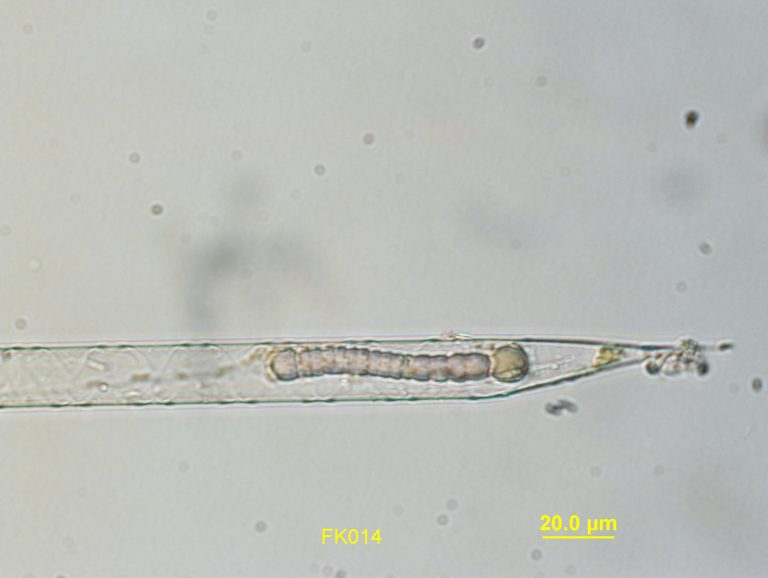
Andreas Novotny thought he would find Hemiaulus here. He has not. “It is what it is, which is fine,” he says. “What we need to do is figure out why.”  Andreas is a PhD. student and his research focuses in the symbiotic relationship between a kind of plankton, a Diatom called Rhizosolenia, and a Nitrogen-fixing Cyanobacteria, … Continued

Log Post: The Big Picture

What comes to mind when you think of the ocean? Waves, vastness, blue, or the many things that it contains. You may picture dolphins or fish, if you really know your stuff you might even imagine microclines or currents. The scientific party onboard of R/V Falkor is a little different. When they look at the ocean, … Continued

Page: Schmidt Ocean Institute 2016 Expeditions

Investigating Life Without Oxygen in the Tropical Pacific January – February Data from sensors lowered on Falkor's CTD rosette will go to the Marine Geophysical Data System.M. Schrope Large-scale ocean circulation naturally results in low-oxygen areas of the ocean called oxygen deficient zones (ODZs). The cycling of carbon and nutrients – the foundation of marine … Continued

Page: Our Story

Schmidt Ocean Institute is a 501(c)(3) private non-profit operating foundation established to advance oceanographic research, discovery, and knowledge, and catalyze sharing of information about the oceans.  Schmidt Ocean Institute Acquires New Research Vessel To Expand Ability To Explore, Research The Ocean March 23, 2021 Schmidt Ocean Institute announced today it has acquired a new research … Continued

Person: Cédric Boulart

Cédric Boulart is a marine geochemist based at IFREMER in Brest, France. He received his Ph.D. in Ocean and Earth Sciences from the University of Southampton (UK) in 2008, as part of a European Project focusing on the processes at mid-ocean ridges. He specializes in the development of methods and sensors for the detection, mapping … Continued