News: Global Initiative – United Nations Decade of Ocean Science for Sustainable Development

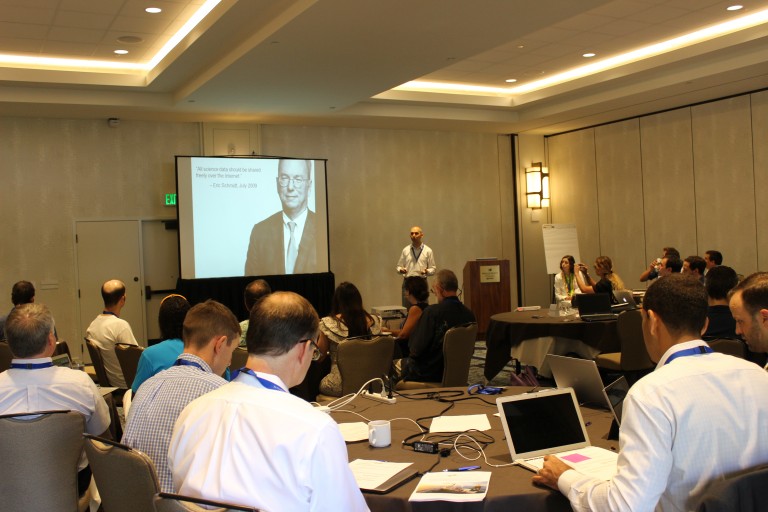
May 13-15, 2019: Schmidt Ocean Institute was proud to contribute to the first planning meeting for the UN Decade of Ocean Science. The Global Planning Meeting provided a forum to gather approximately 200 thought-leaders/champions/key stakeholders. A mixture of plenary and breakout groups facilitated international, interdisciplinary discussions across sectors (such as: ocean science and technology; ocean … Continued

News: Otherworldly Mirror Pools, New Lifeforms, and Mesmerizing Landscapes Discovered on Ocean Floor

Scientists aboard Schmidt Ocean Institute’s research vessel Falkor recently discovered and explored a hydrothermal field at 2,000 meters depth in the Gulf of California where towering mineral structures serve as biological hotspots for life. These newly discovered geological formations feature upside down ‘mirror-like flanges’ that act as pooling sites for discharged fluids. GULF OF CALIFORNIA, … Continued

News: New Undersea Maps Lead to Hydrothermal Vent and Species Discoveries

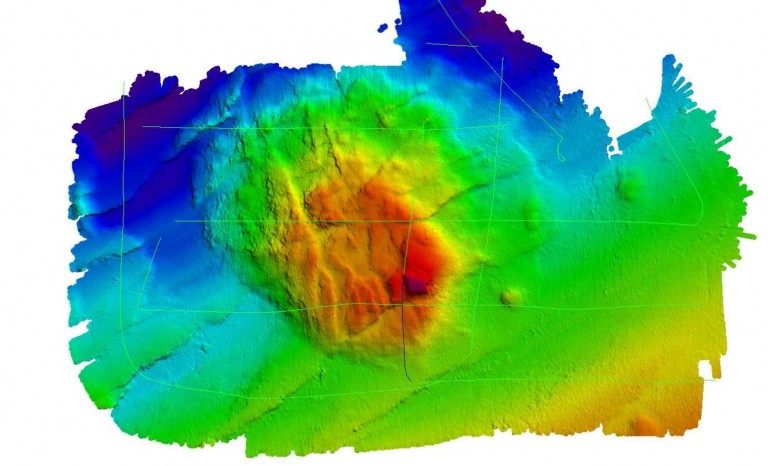
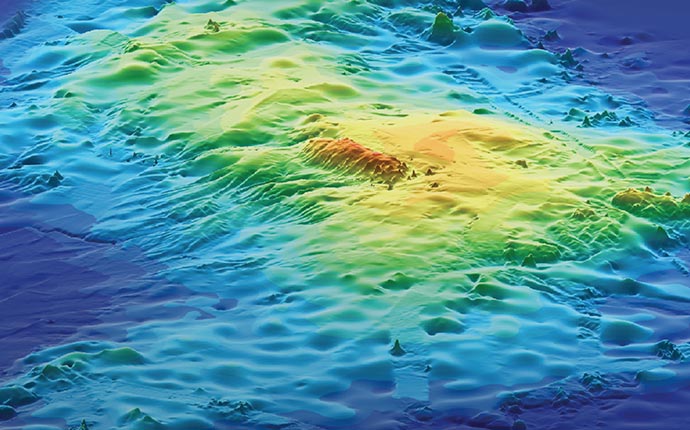
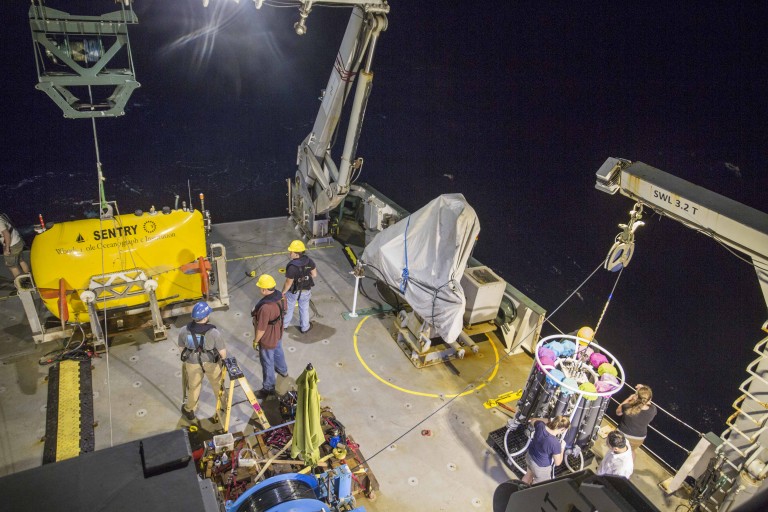
Autonomous and interactive robotic seafloor mapping systems were used on an expedition aboard research vessel Falkor in the southern Gulf of California, leading scientists to a new hydrothermal vent field and enabling the discovery of new deep-sea organisms. SOUTHERN PESCADERO BASIN, GULF OF CALIFORNIA – A spectacular new hydrothermal vent field, named JaichMatt, has been … Continued

News: Artificial Intelligence Guides Rapid Data-Driven Exploration of Changing Underwater Habitats Mapped onto one of the World’s Largest Multiresolution 3D Photogrammetric Reconstruction of the Seafloor

Researchers aboard Schmidt Ocean Institute’s research vessel Falkor used autonomous underwater robots, along with the Institute’s remotely operated vehicle (ROV) SuBastian, to acquire 1.3 million high resolution images of the seafloor at Hydrate Ridge, composing them into the largest known high resolution color 3D model of the seafloor. Using unsupervised clustering algorithms, they identified dynamic … Continued

News: Fleet of Aerial, Surface and Underwater Robots Maps Ocean Front

SAN DIEGO, CALIFORNIA – Using multiple autonomous vehicles simultaneously, an interdisciplinary team of scientists and engineers returns to the United States after exploring the North Pacific  Subtropical front – a sharp boundary where cold fresh waters from the north meet warm salty waters from the south. The fronts are the most conspicuous oceanographic phenomena and … Continued

News: Scientists Voyage To The White Shark Café

SAN DIEGO, CALIFORNIA – Scientists are a step closer to understanding what draws white sharks each spring to the “White Shark Café”, an offshore aggregation area halfway between Mexico and Hawaii in the Pacific. An interdisciplinary research team from five Institutions led by Stanford University Marine Biologist Dr. Barbara Block, has just completed a month-long … Continued

News: Schmidt Ocean Institute Impact Award presented to Dr. Christopher Zappa

On October 3rd, 2017 Schmidt Ocean Institute presented the first Impact Award to Dr. Christopher Zappa at the celebration of five years of research on board Falkor. The Schmidt Ocean Institute Impact Award recognizes investigators who have sailed on research vessel Falkor and taken great risks to align their research with our mission, to transform ocean … Continued

News: Deep-Sea Exploration Gives New Insight and Discoveries in Largest and Deepest UNESCO World Heritage Site

Scientists return on Schmidt Ocean Institute’s research vessel Falkor after conducting underwater robotic dives in never before visited waters in the Phoenix Islands Protected Area (PIPA). APIA, SAMOA – Seventeen underwater robotic dives have been made using ROV SuBastian, completing the first expedition of the islands and eastern seamounts of the Phoenix Islands Protected Area … Continued

News: Fossil coral reefs show sea-level rose in bursts during last warming

Nature Communications published an open access paper reporting the outcomes of a sea level rise study conducted on R/V Falkor in 2012. High resolution 3D maps of about a dozen of drowned coral reefs in the Gulf of Mexico acquired by R/V Falkor indicate that all fossil reefs are structured into multiple large flat terraces, separated by 3-4 meters … Continued