Cruise: Searching for the Asgards

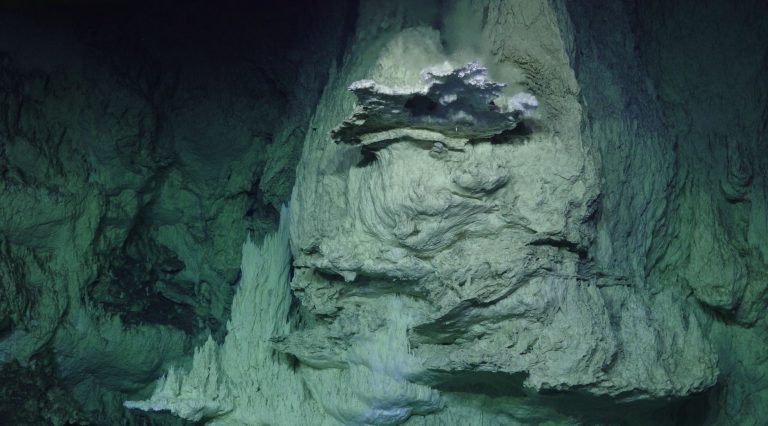
Almost all visible life on Earth is eukaryotic. Trees, fish, humans, kelp, flowers, and mushrooms all share one thing: they are built from eukaryotic cells. Unlike prokaryotic cells, eukaryotic cells contain a nucleus and mitochondria, the powerhouses that facilitate cellular functions such as eating, breathing, and physical appearance. Yet, where and how the first eukaryote came into existence is still one of biology’s greatest unknowns. Dr. Brett Baker, of the University of Texas at Austin, and an international team of scientists are working to resolve this mystery.

Cruise: A Tale of Two Submarine Canyons

The Malvinas Current offshore of Argentina — a branch of the Antarctic Circumpolar Current — carries nutrients and cold water from the south, boosting primary productivity in the Southwest Atlantic Ocean. Underwater canyons along Argentina’s continental slope create irregularities in the seafloor that could change the path of this powerful current, facilitating an exchange of water masses between the shelf and the open Ocean. Scientists hypothesize that, as a consequence of this dynamic, massive phytoplankton blooms and biodiversity hotspots are present near the canyon heads in these waters. 

Cruise: Visualizing the Deep off Uruguay

The Rio de la Plata drains into the Atlantic Ocean, delivering sediment-rich contents from the Paraná and Uruguay Rivers, each fed by myriad streams and tributaries. The mixing of fresh water with the nutrient-rich seawater upwelled along the continental shelf fosters remarkable biodiversity. Vulnerable Marine Ecosystems, or VMEs, are critical yet fragile habitats that support a diverse array of species, and human activities pose a significant threat to these ecosystems. Currently, there is only one reported VME in Uruguay. It is home to cold-water coral reefs formed by Desmophyllum pertusum, a slow-growing coral that grows throughout the Atlantic Ocean; experts suspect this ecologically important animal is threatened and in decline. Scientists believe there are more vulnerable ecosystems, but have not had access to the technology needed to describe deep-water areas in Uruguayan waters.

Cruise: High Seas and Seamounts of the Nazca Ridge

8 July - 9 August 2024 #NazcaHighSeas Lush forests of deep-sea corals and sponges host animals and organisms that defy imagination. Many endangered or threatened species like sea turtles, blue whales, and sharks travel here to feed on the abundant nutrients upwelling from the deep. The 8000-meter-deep Atacama Trench, the Southeast Pacific Oxygen Minimum Zone, … Continued

Cruise: Microbes in Oxygen Minimum Zones

Expedition dates: April 12 - May 15, 2024 Oxygen Minimum Zones, or OMZs, are areas in the water column with less oxygen, primarily due to naturally occurring physical and biological processes within the Ocean. The core of the OMZs is anoxic, making them inhospitable to most large animals, yet microbes have adapted to live and … Continued
Cruise: Unexplored Seamounts of the Salas y Gómez Ridge

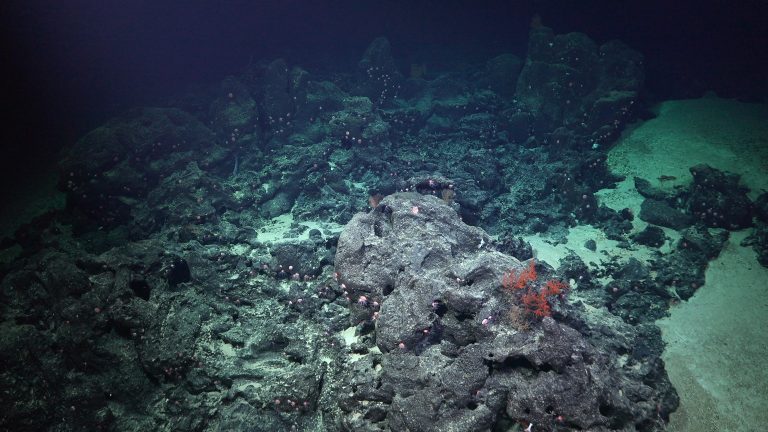
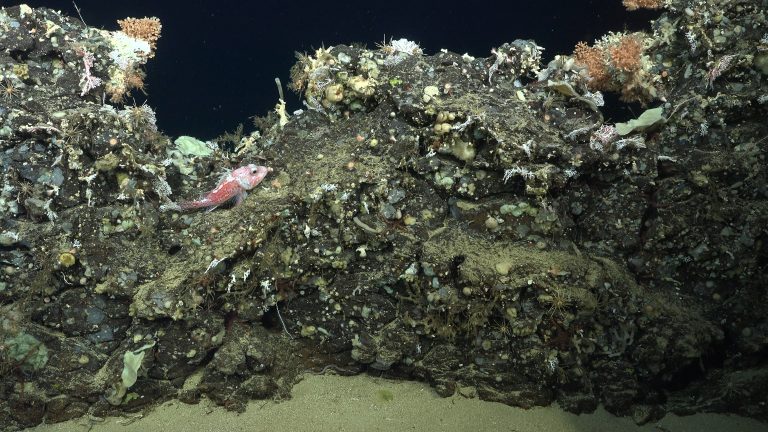
Expedition dates: Feb. 24 - Apr. 4, 2024 The Salas y Gómez Ridge extends off the coast of Chile to Rapa Nui, also known as Easter Island, in the Central Pacific. Created by volcanism, these underwater mountains provide essential habitats for deep-sea organisms, supporting some of the highest marine endemism globally. Many of the species … Continued

Cruise: Seamounts of the Southeast Pacific

Expedition dates: Jan. 8 - Feb. 11, 2024 Underwater mountains, or seamounts, are remarkable features on the seafloor, playing an integral role in oceanic processes and connectivity. Rising up from the depths, seamounts create complex current patterns that influence what lives on and above them. They are an oasis for deep-sea communities, providing food, shelter, … Continued

Cruise: Ultra Fine-Scale Seafloor Mapping

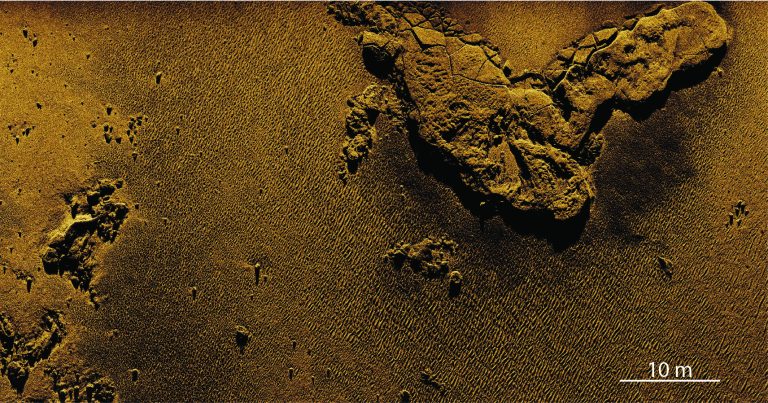
Expedition dates: October 25 - November 23, 2023 Seafloor mapping is integral to oceanographic research. Bathymetric data illustrate the seafloor’s depth, contours, and physical features, and it is often the first essential step in planning a successful submersible operation. The typical tool for seafloor mapping, multibeam sonar, creates three-dimensional topographical outlines—rather than visual images. Physical … Continued

Cruise: Dynamics of Sinking Microplastics

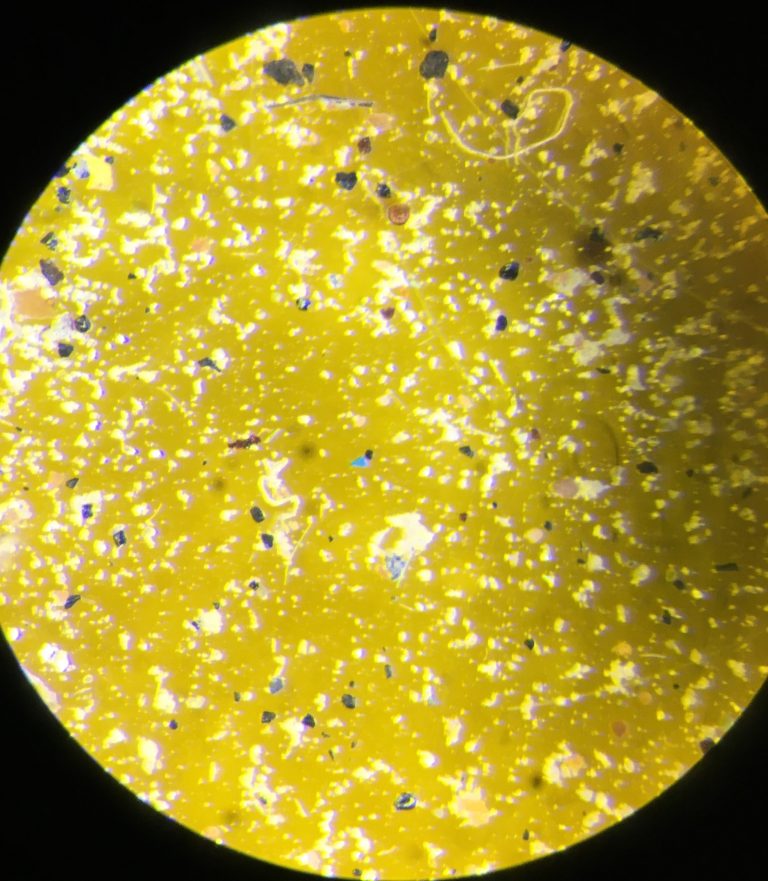
Expedition dates: August 2 - August 7, 2023 Plastic pollution is pervasive in our Ocean. The most prevalent component of plastic pollution isn’t large pieces of trash floating on the surface, but tiny bits of waste called “microplastics” that are found throughout the water column. Ranging from 5 mm in diameter (a pencil eraser) down … Continued

Cruise: Hydrothermal Vents of the Western Galápagos

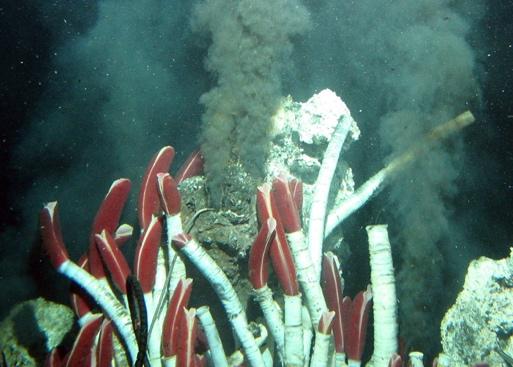
Expedition dates: August 13 - September 10, 2023 In 1977, scientists at the Eastern Galápagos Spreading Center uncovered an ecosystem that changed our conception of life—hydrothermal vents. In the crushing darkness of the deep sea, life thrives on these vents as bacteria facilitate a whole food web by converting chemicals, rather than sunlight, into energy. … Continued