A month-long expedition to the mid-Atlantic Ocean discovered two rare types of hydrothermal vent fields, uncovered novel insights into crustal fluid circulation, observed two bigfin squids, and captured the first footage of a species of the elusive barreleye fish.
Video and photos available here.
FORTALEZA, Brazil, July 7, 2026 — Scientists on a 35-day research expedition onboard Schmidt Ocean Institute’s R/V Falkor (too) discovered two new hydrothermal vent fields in a region of the middle of the Atlantic Ocean known as the Doldrums Megatransform and Fracture Zone, which lies just north of the equator about 800 miles off the northeast coast of Brazil. This large, tectonically active system cuts across the world’s longest mountain chain, the Mid-Atlantic Ridge. While many hydrothermal vents have been found along the ridge, these are the first known vent fields to be discovered in and around the Doldrums system.
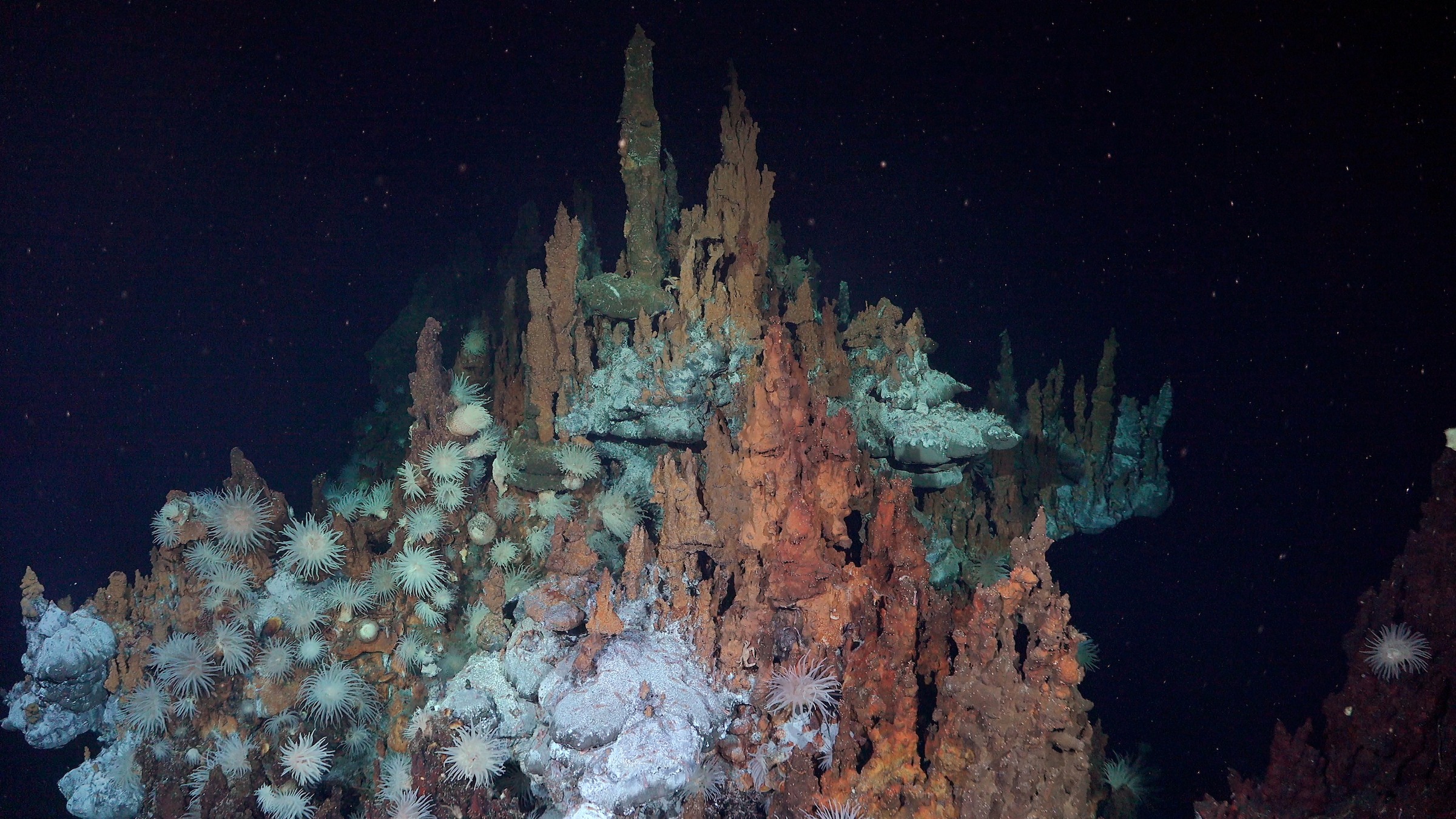
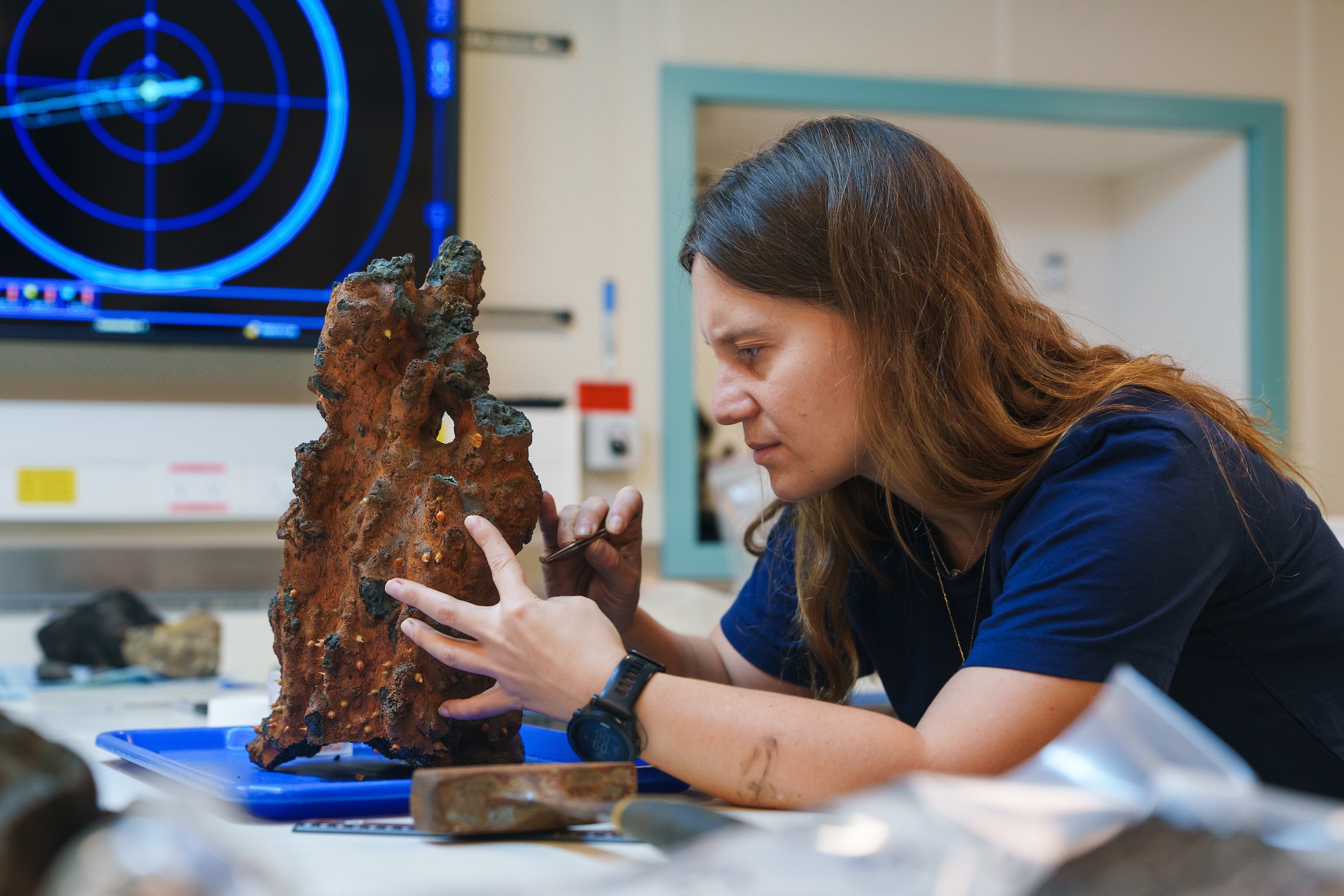
Initial observations suggest both vent fields are hybrid, heat-producing “plumbing” systems combining typical volcanic venting with serpentinization, a chemical reaction that occurs when rocks from the Earth’s mantle are exposed to seawater. Only a small number of mixed vent fields with both volcanic and serpentinization-related characteristics have been discovered worldwide. The Lost City hydrothermal vent field on the Mid-Atlantic Ridge is a well-known example of hydrothermal circulation driven by serpentinization.
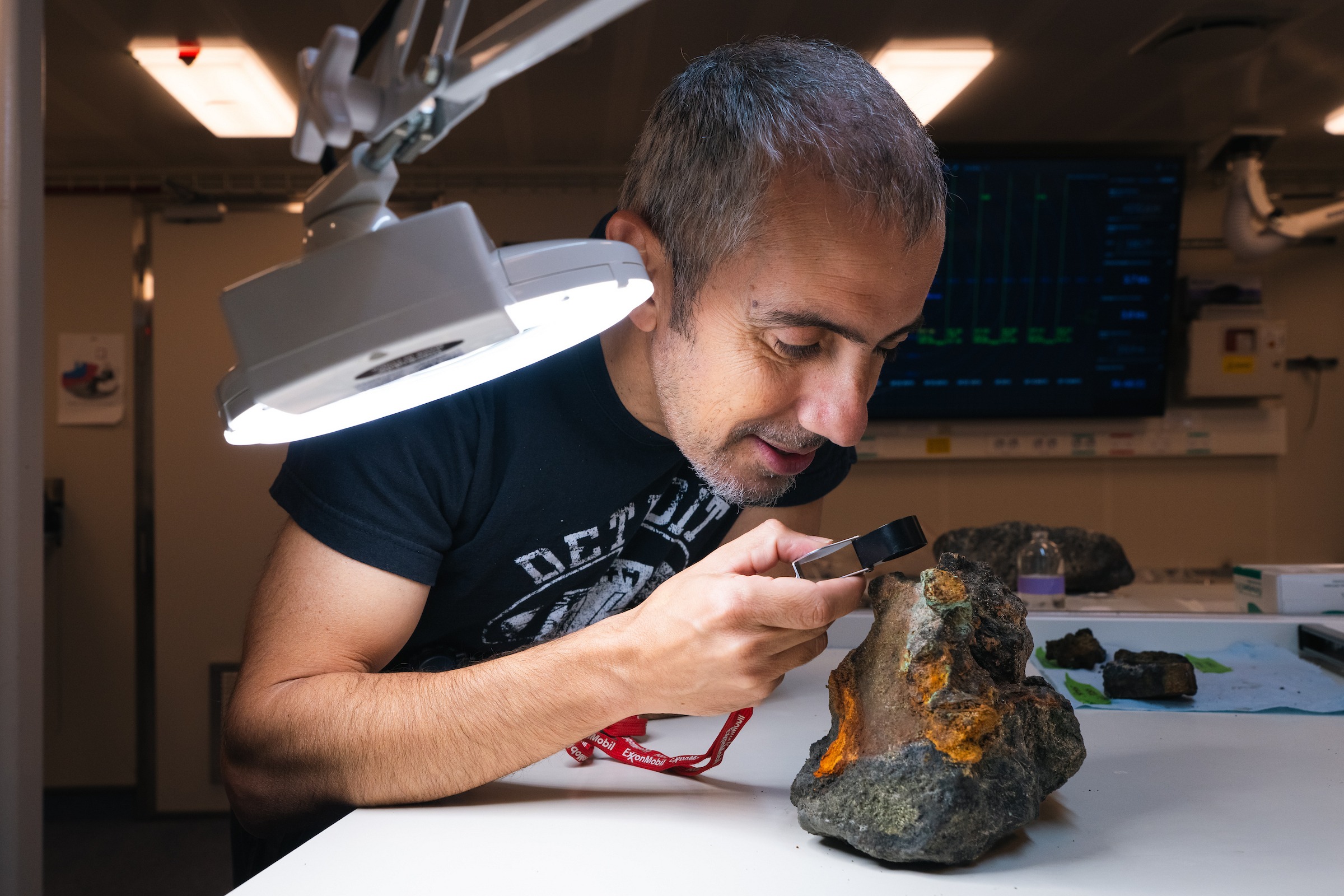
“This discovery shows why exploration still matters,” said the expedition’s Chief Scientist, Dr. Aaron Micallef, a senior scientist at MBARI (Monterey Bay Aquarium Research Institute). “Even in the Atlantic Ocean, where plate boundaries have been studied for decades, there are still places where the first close look can reveal something entirely new. This expedition showed that even in one of the most remote corners of the ocean, our planet remains alive, dynamic, and full of surprises.”
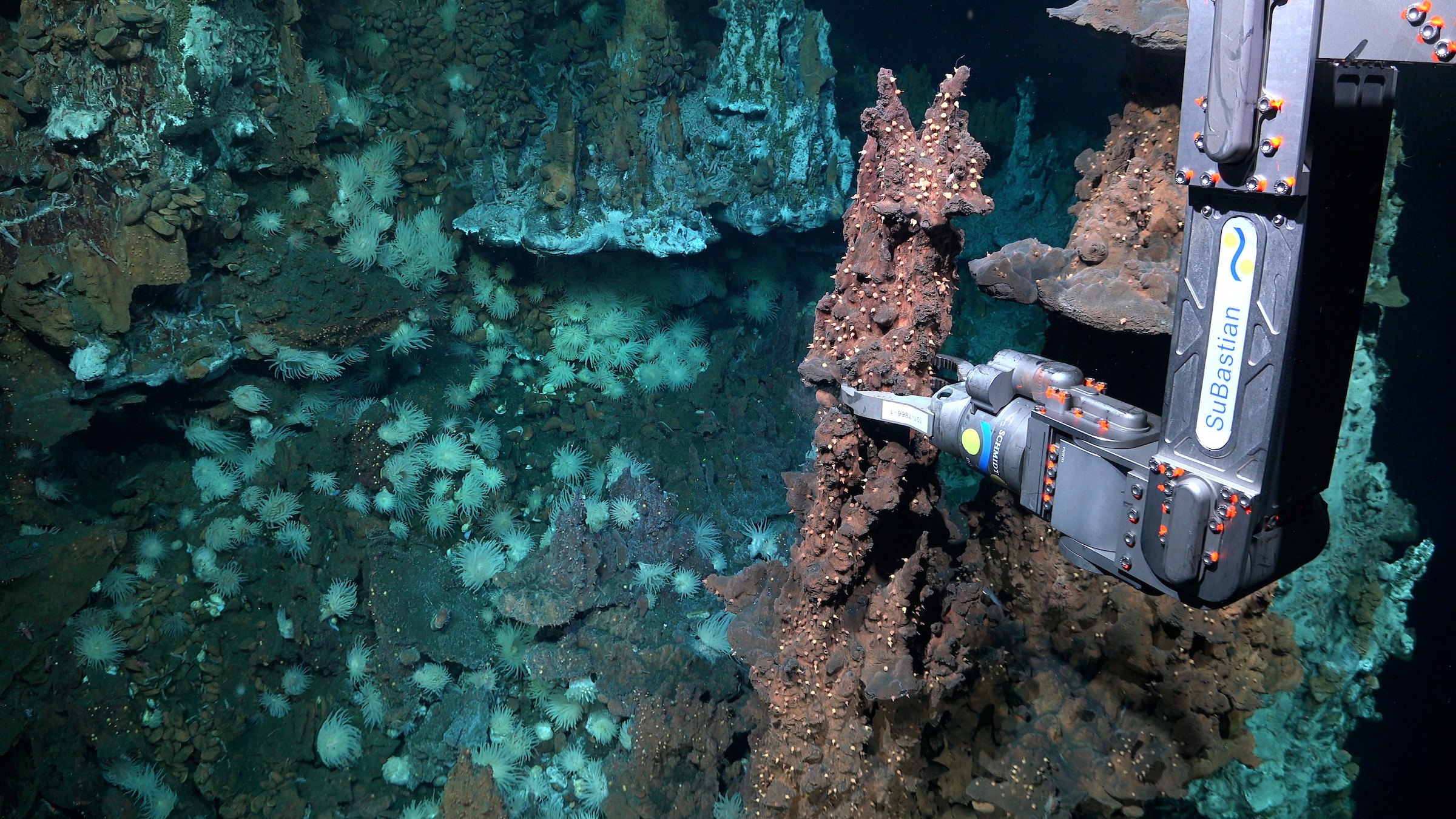
One vent field was extensive, comprising 23 hydrothermal vents, 13 of which had active black smoker chimneys. It is 99,000 meters squared in size — about 24 acres, or 14 FIFA-standard football fields. At this site, the team sampled superheated fluids reaching 280 degrees Celsius (536 degrees Fahrenheit) and observed anemones, crabs, and thousands of blind Rimicaris shrimp. These animals rely on chemosynthetic bacteria that use chemicals in the vent fluids as an energy source. The second vent field, much smaller and weaker, was discovered on the expedition’s last dive with the remotely operated vehicle (ROV) SuBastian and was 170 kilometers (105 miles) from the first vent field.
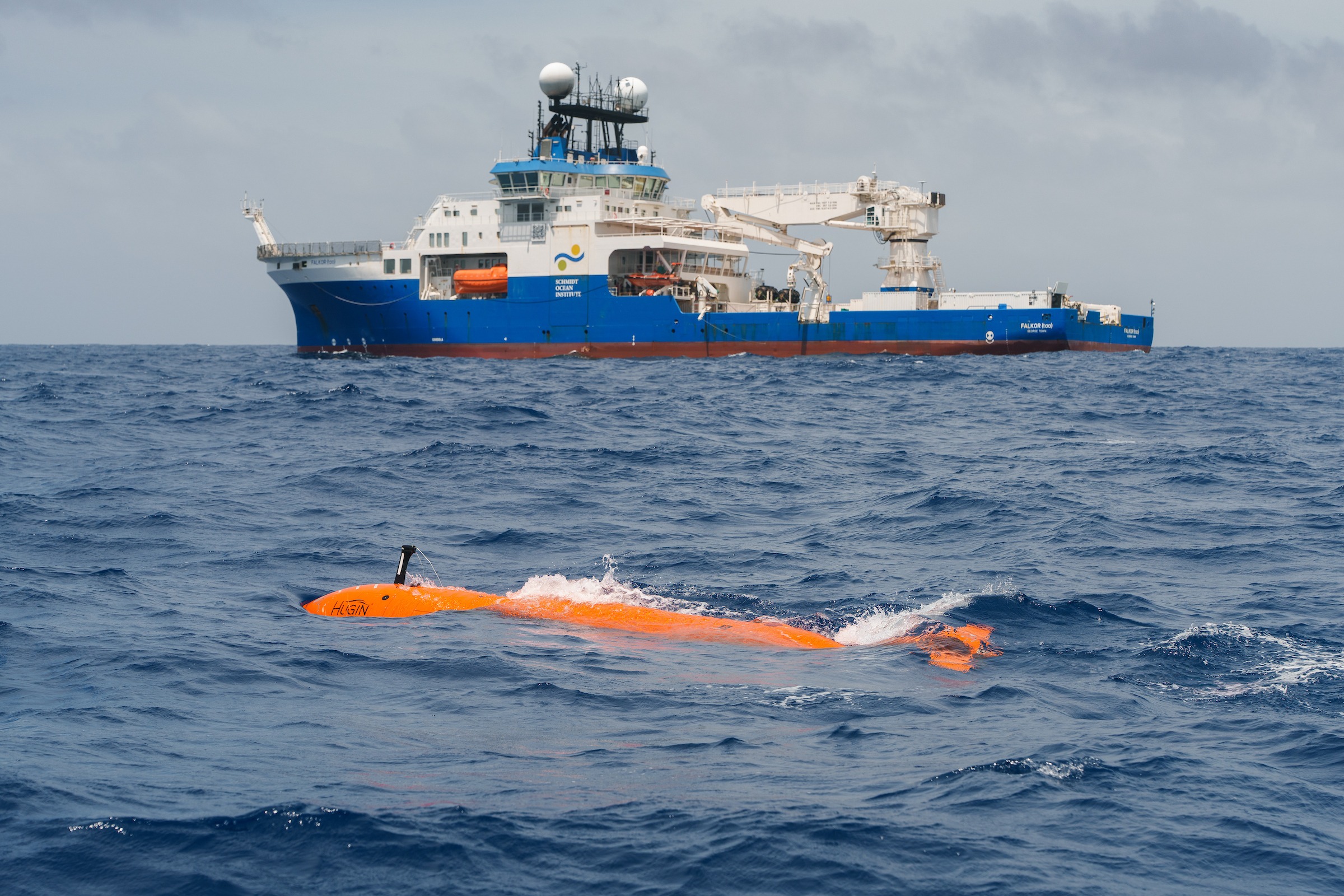
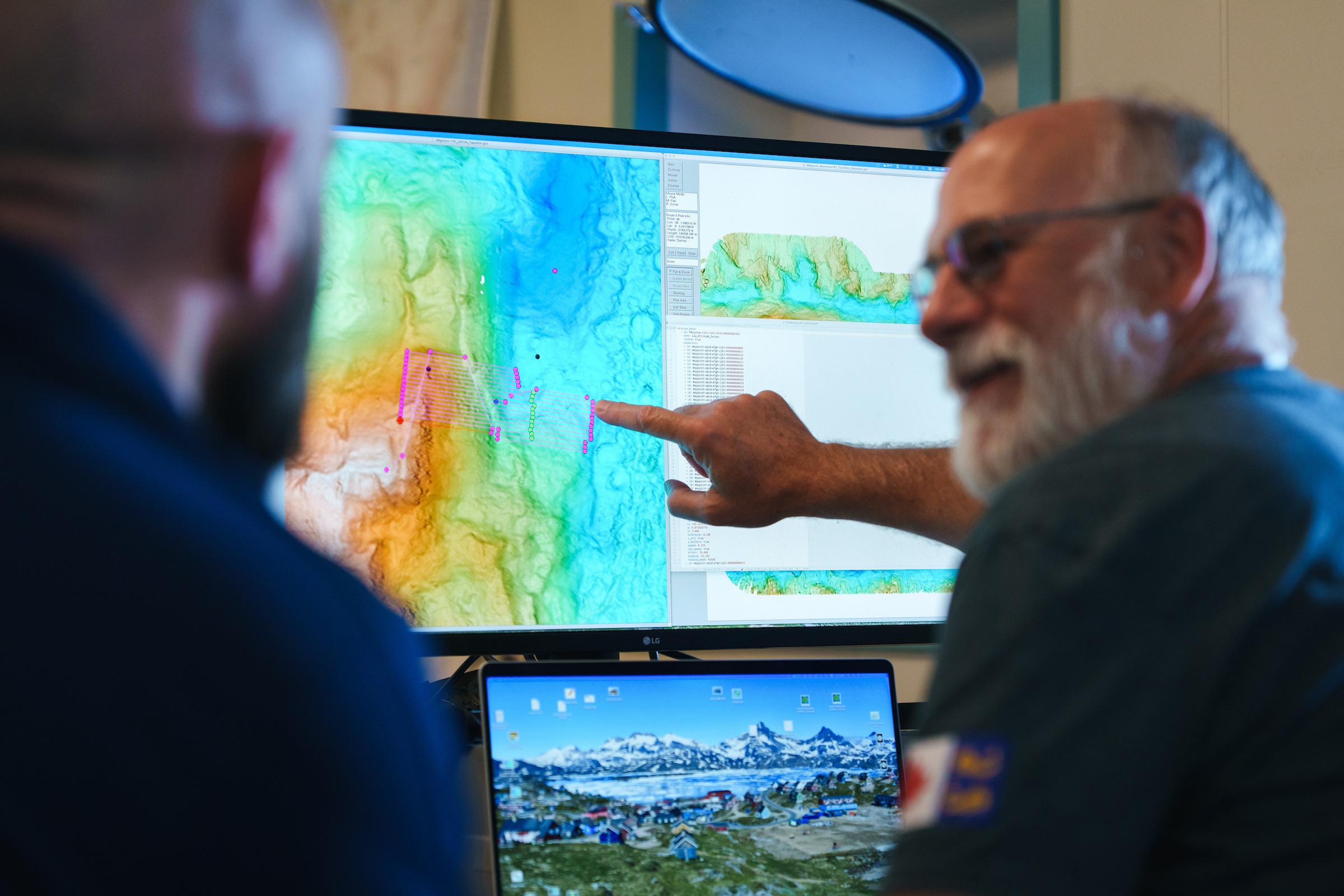
The expedition is the first time that Schmidt Ocean Institute’s new autonomous underwater vehicle (AUV), The Childlike Empress, has been used for scientific missions, demonstrating its effectiveness for quickly locating interesting seafloor features.
During the expedition, scientists from the Brazilian Geological Survey shared observations of a water data anomaly collected in the region in 2013, which helped the team refine their search area. The team used R/V Falkor (too)’s shipboard sonar to map the region, then The Childlike Empress to generate high-resolution maps that allowed them to pinpoint the first vent field’s exact coordinates and deploy ROV SuBastian, leading to the visual confirmation of active hydrothermal vents in record time.
The science team was surprised to observe evidence of hydrothermal fluid circulation along faults, fractures, and scarps during all ROV dives undertaken across the Doldrums system. The discovery suggests that transform systems play a more significant role than previously recognized in drawing seawater into the oceanic crust and releasing it back into the ocean, and that hydrothermal venting may be more widespread in these regions than previously thought, Micallef said.
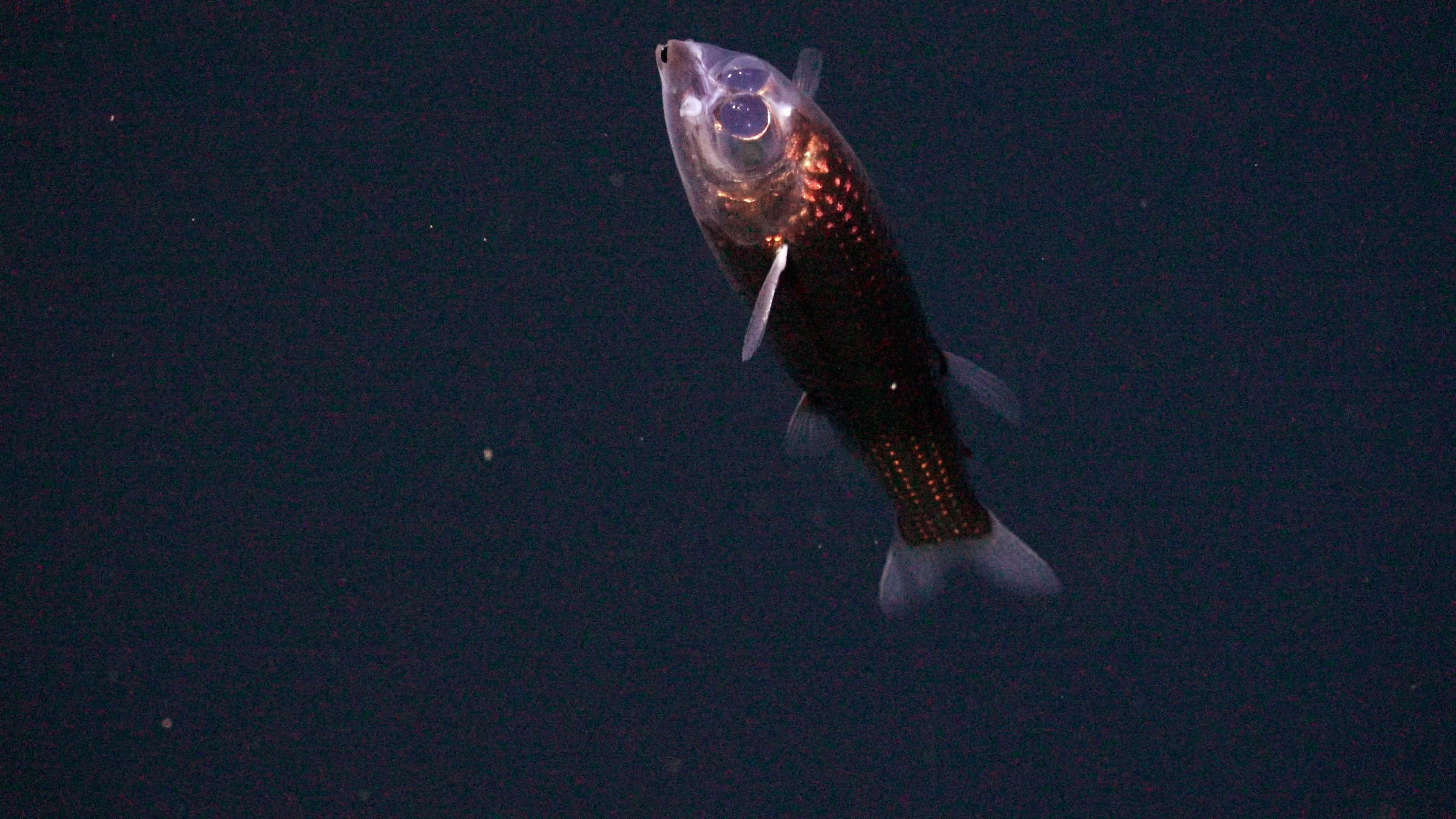
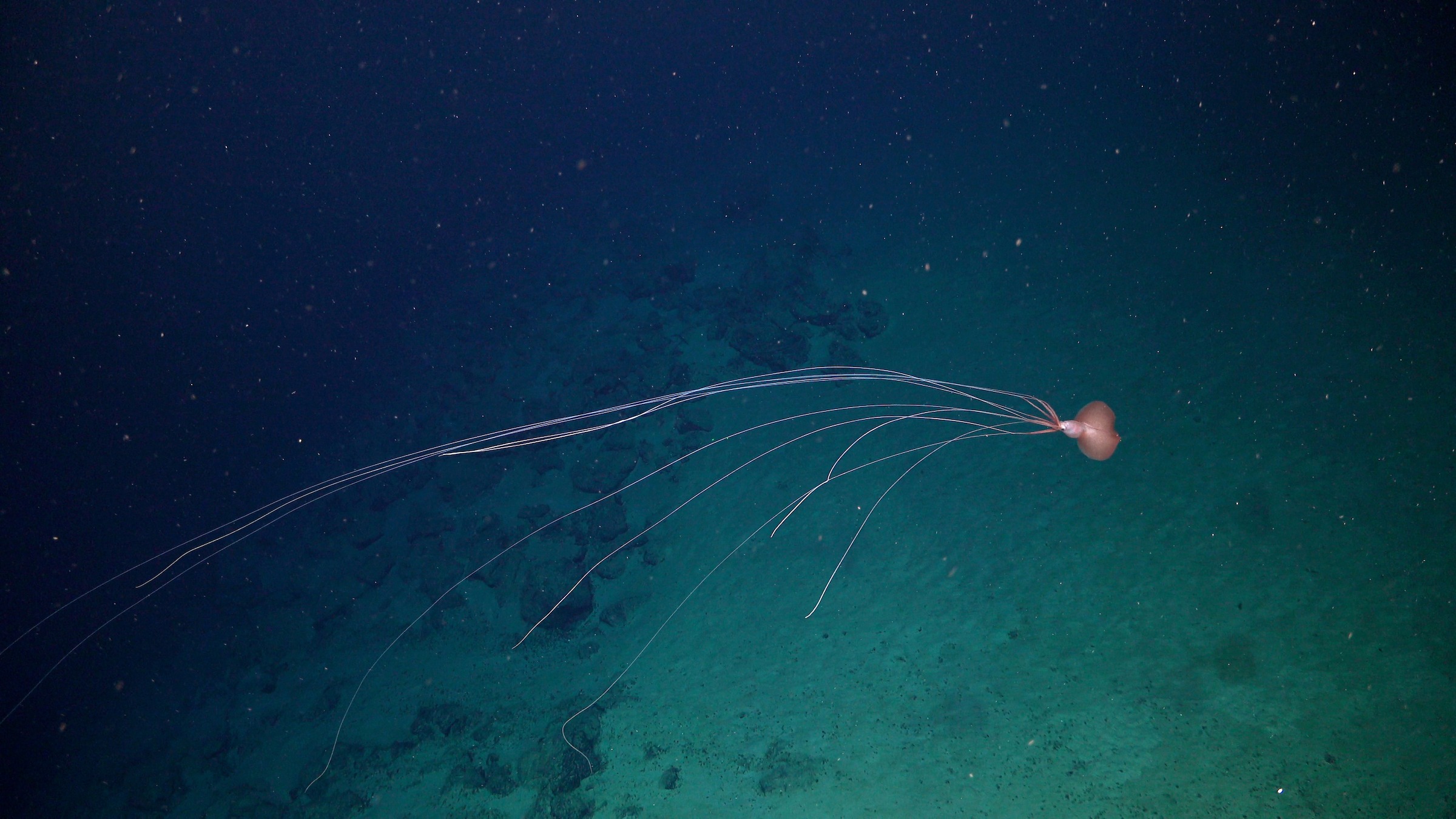
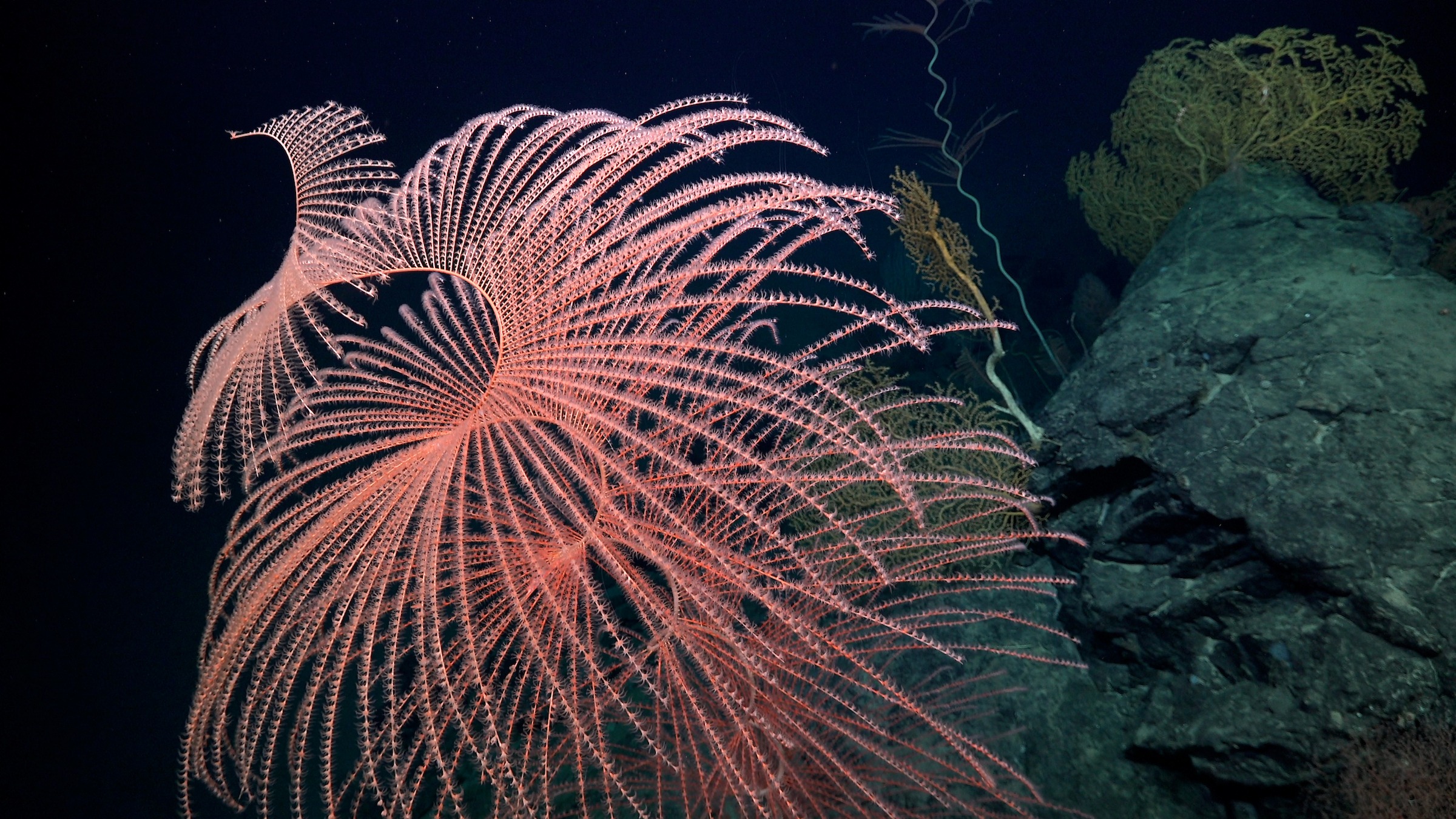
The expedition was also rich with deep-sea animal encounters. On one of the dives, the team observed two elusive bigfin squids (Magnapinna sp.), the deepest-dwelling squid known for its thread-like tentacles that can measure up to 8 meters (26 feet) in length. They also captured the first footage of a particular species of barreleye fish (Winteria telescopa), a deep-sea animal famous for its translucent head and tubular eyeballs.
“We arrived searching for vents, faults, and seamounts. We leave with something even more valuable: a deeper understanding of ecosystems in one of the least explored regions of the Atlantic Ocean,” said Dr. Paula Zapata Ramirez, assistant professor at the Universidad Pontificia Bolivariana. “Every sample, every image, and every discovery brings us one step closer to understanding the hidden parts of our planet.”
“Mapping almost 147 kilometers squared at 1-meter resolution during our first AUV The Childlike Empress science mission with this team of experts rapidly uncovered hidden wonders of the deep sea,” said Schmidt Ocean Institute Executive Director Dr. Jyotika Virmani. “Serpentinization is a process in which seawater reacts with minerals in rocks, producing heat and chemical energy that allow life to thrive in the deep ocean without sunlight, so a better understanding of these systems could provide clues for finding life on other planets.”
# # #
About the Organizations
Schmidt Ocean Institute was established in 2009 by Eric and Wendy Schmidt to catalyze the discoveries needed to understand our ocean, sustain life, and ensure the health of our planet through the pursuit of impactful scientific research and intelligent observation, technological advancement, open sharing of information, and public engagement, all at the highest levels of international excellence. For more information, visit www.schmidtocean.org
MBARI (Monterey Bay Aquarium Research Institute) is a non-profit oceanographic research center founded in 1987 by the late Silicon Valley innovator and philanthropist David Packard. Our mission is to advance marine science and engineering to understand our changing ocean. Learn more at mbari.org.