Scientists completed the most comprehensive study of “salt finger mixing” in the tropical Atlantic in over 20 years—a hard-to-measure ocean physics phenomenon that may have a strong impact on phytoplankton growth and carbon export to the deep ocean.
Video and photos available here.
BRIDGETOWN, Barbados, October 7, 2026— In the tropical Atlantic Ocean, scientists onboard Schmidt Ocean Institute’s R/V Falkor (too) have completed the most comprehensive survey in over two decades on an ocean physics phenomenon called salt finger mixing – which plays a critical role in ocean mixing but is extremely difficult to study, leaving a gap in understanding how our Ocean is changing.
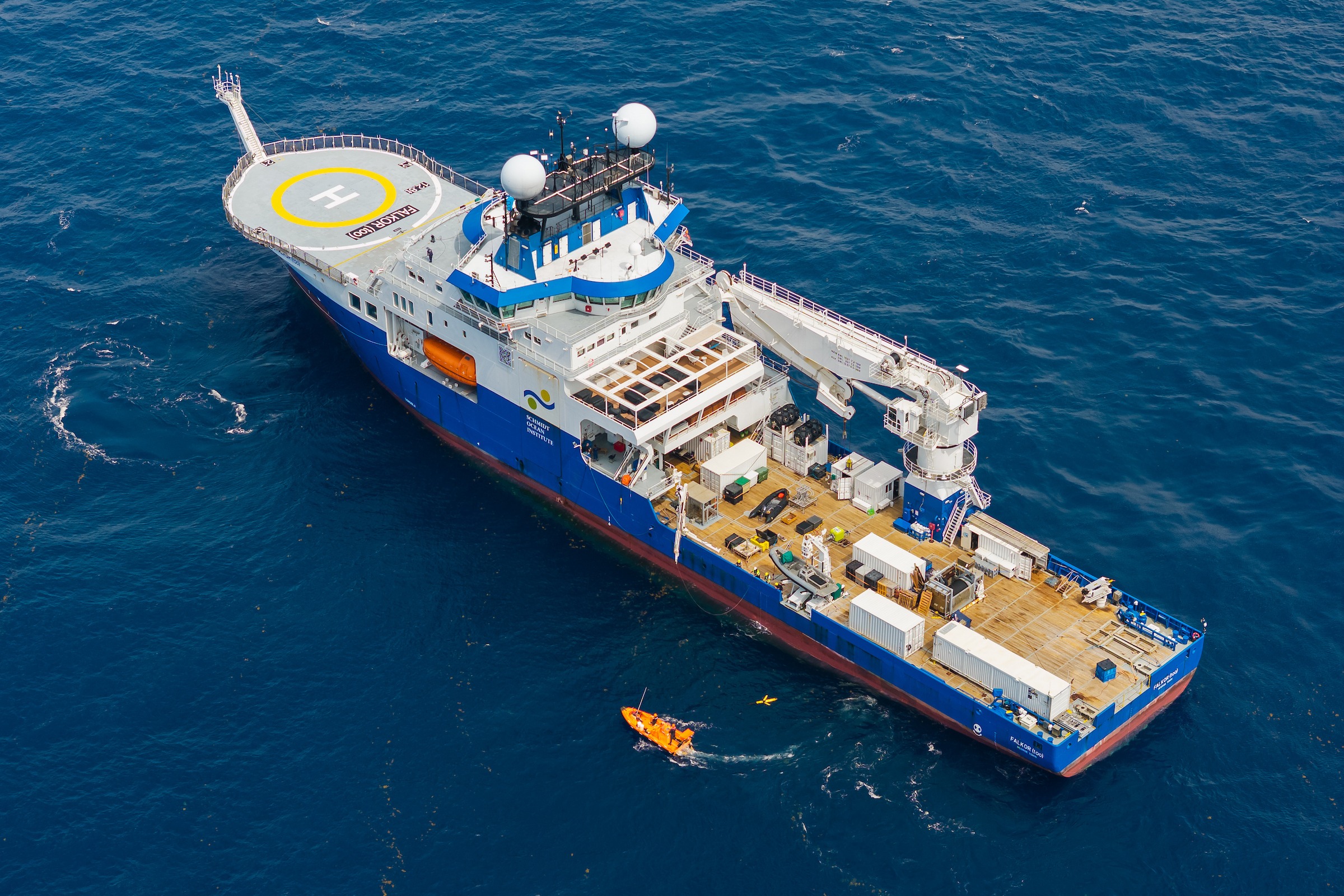
Salt finger mixing occurs when warm, salty surface water sits atop cool, less salty water. The driving forces behind this phenomenon are diffusion and density. Heat makes water less dense, and salt makes it denser. Because heat diffuses through water 100 times faster than salt, the mixing waters form tiny alternating “fingers” of sinking and rising fluid.
Salt finger mixing is especially prominent in the tropical Atlantic because warm surface waters collide with cooler waters carried by deep-ocean currents. The scientists suspect this mixing carries critical nutrients to the surface, feeding phytoplankton in an otherwise nutrient-poor ecosystem.
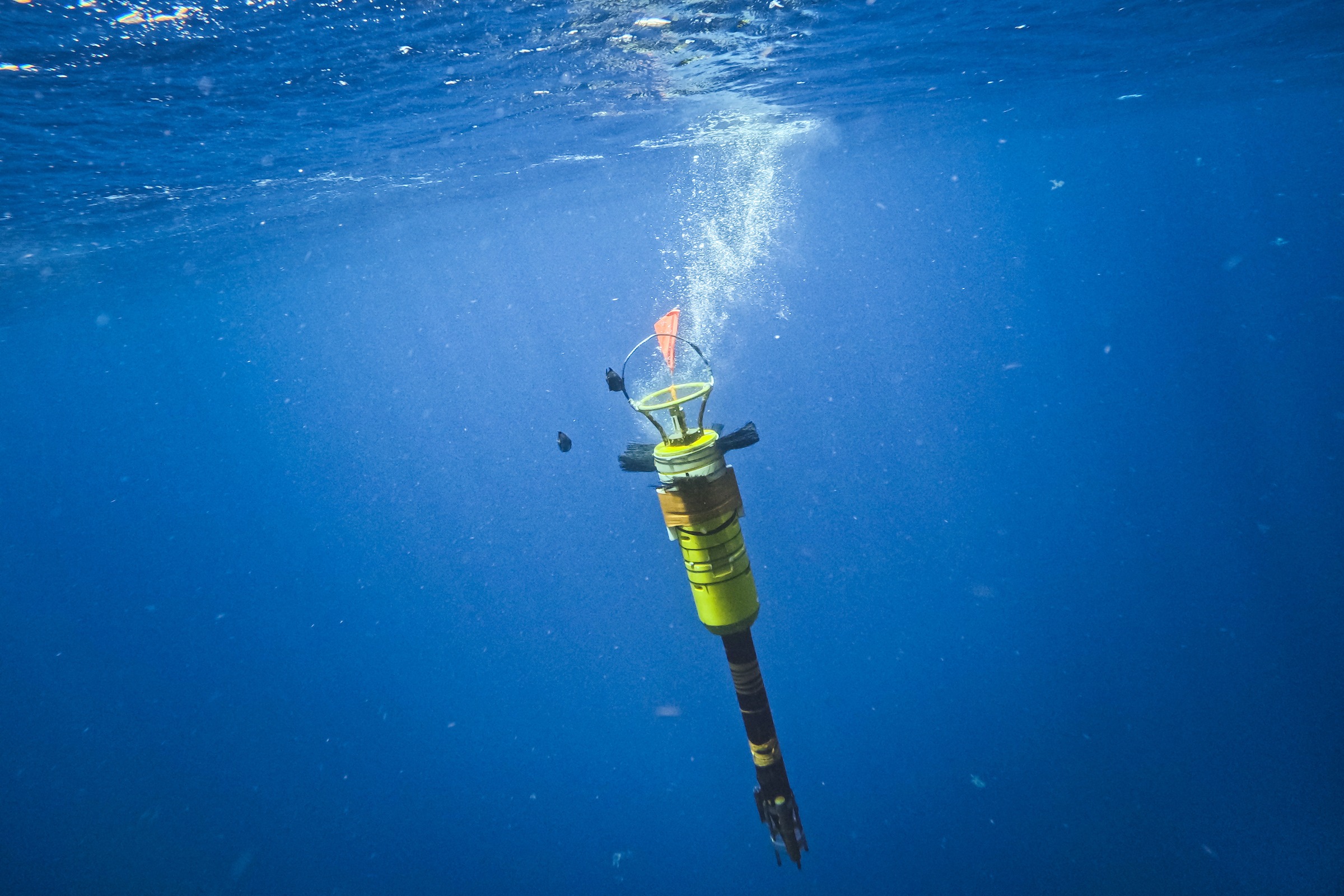
“Measuring fine-scale ocean mixing is like measuring a whisper,” said Dr. Joseph Gradone, an assistant research professor at Rutgers University and co-chief scientist for the expedition. “The fine-scale ocean mixing we are interested in is as difficult to measure, but if we can capture just how many whispers there are, we might learn how truly widespread it is.”
A better understanding of salt finger mixing is important for improving climate models. Scientists hypothesize that climate change may increase the rate of salt finger mixing by sharpening the contrast in water temperature and salinity between tropical surface waters and the deeper polar waters that flow into the Atlantic.
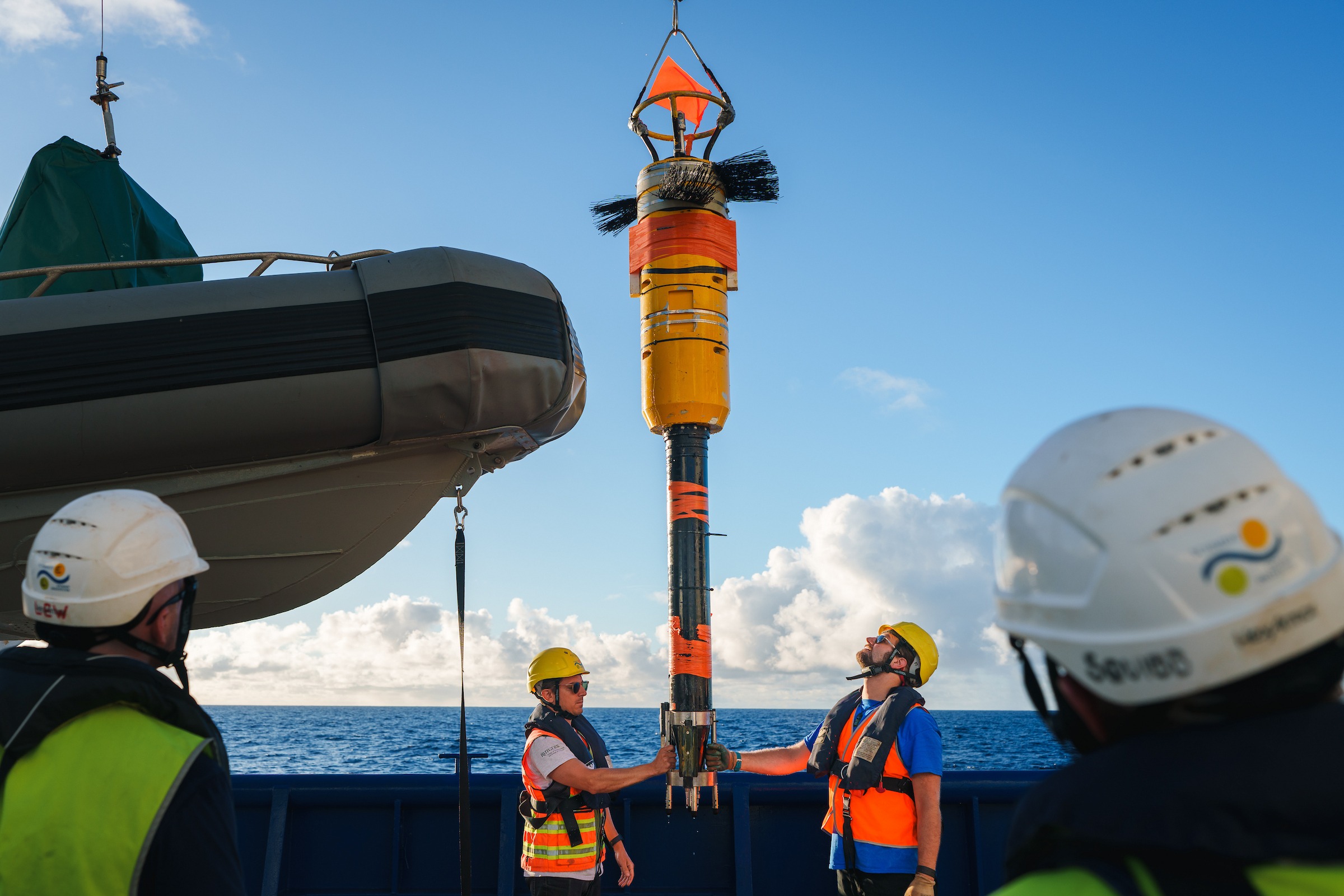
Early-career researchers, including the two co-chief scientists, Gradone and Dr. Corday Selden from Rutgers University, comprised most of the team. To study the phenomenon, they used an array of underwater technologies, including a nitrate sensor, a Niskin bottle rosette for water sampling, robotic gliders, and a vertical microstructure profiler. The vertical microstructure profiler, a device for measuring subtle changes in turbulence and other physical properties of the water, can reach depths of 5500 meters and quantify fine-scale ocean mixing. They also examined nitrogen consumption and carbon fixation, which are vital components of phytoplankton growth.
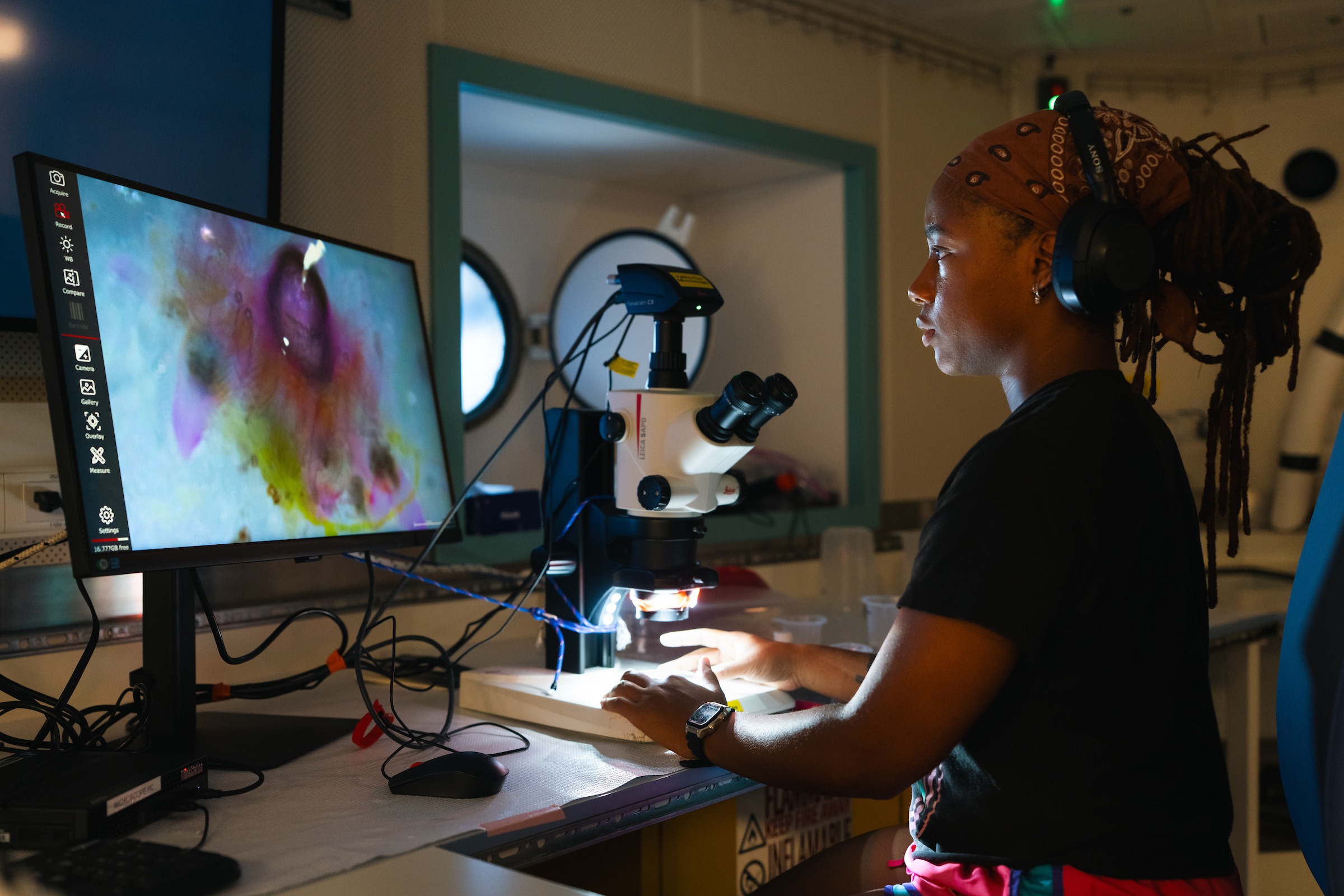
“Over the coming year, our team will process the data collected during the expedition to gain insights into the relationship between salt finger mixing and plankton,” said Selden, an assistant professor at Rutgers University. “We will assess plankton growth, diversity, and grazing rates against physical measurements of salt finger mixing to determine how the process feeds surface ecosystems. These findings will clarify how fine-scale ocean mixing drives both marine food webs and potential carbon export to the deep sea.”
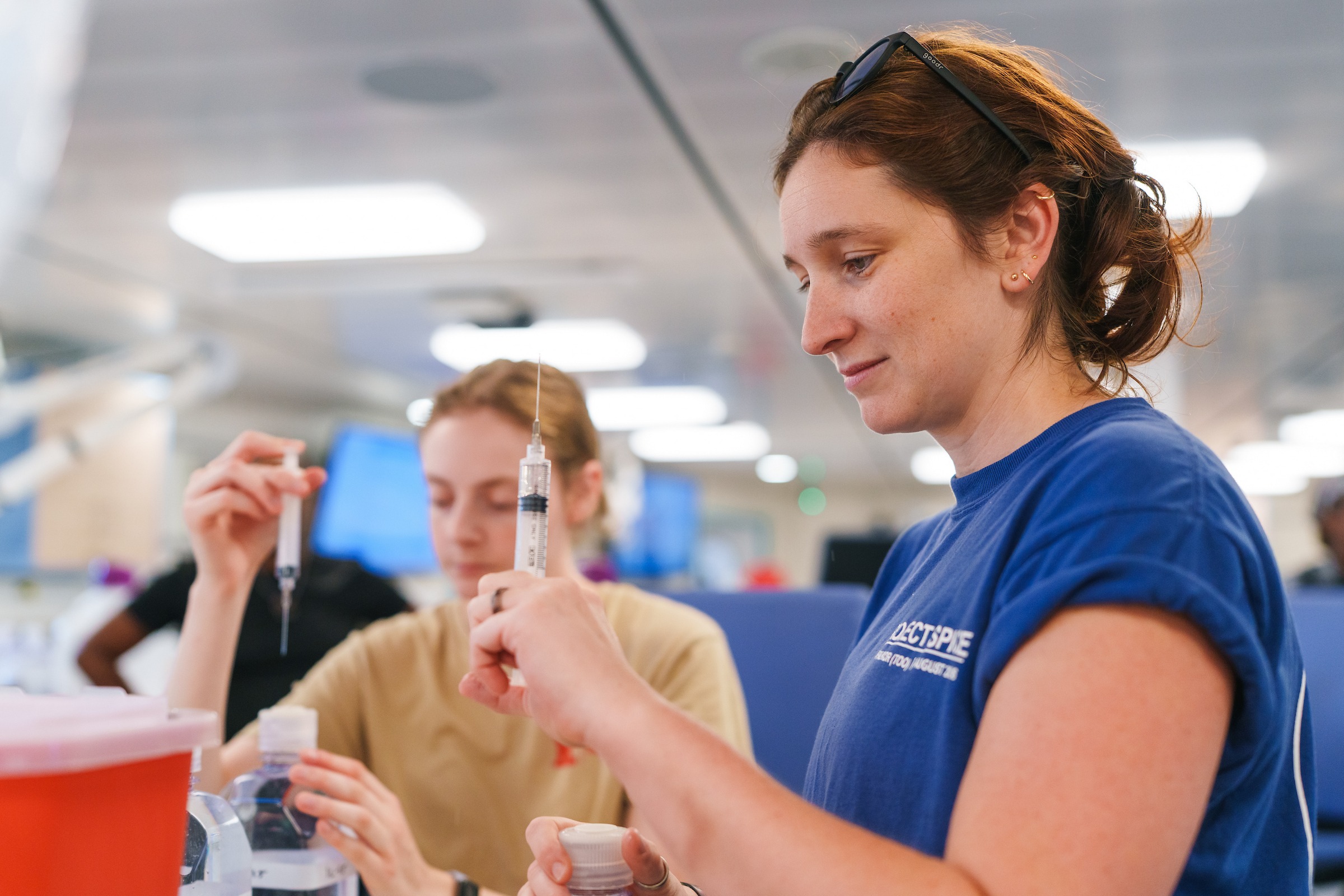
The ocean absorbs approximately 30% of all human-created carbon emissions. Much of the absorbed carbon dioxide is captured by phytoplankton during photosynthesis and converted into organic carbon. When these phytoplankton are consumed or die, their remains slowly sink towards the seafloor, exporting carbon to deeper parts of the ocean, and preventing it from returning to the atmosphere for thousands of years. If salt finger mixing contributes to phytoplankton growth, the amount of carbon sinking could change.
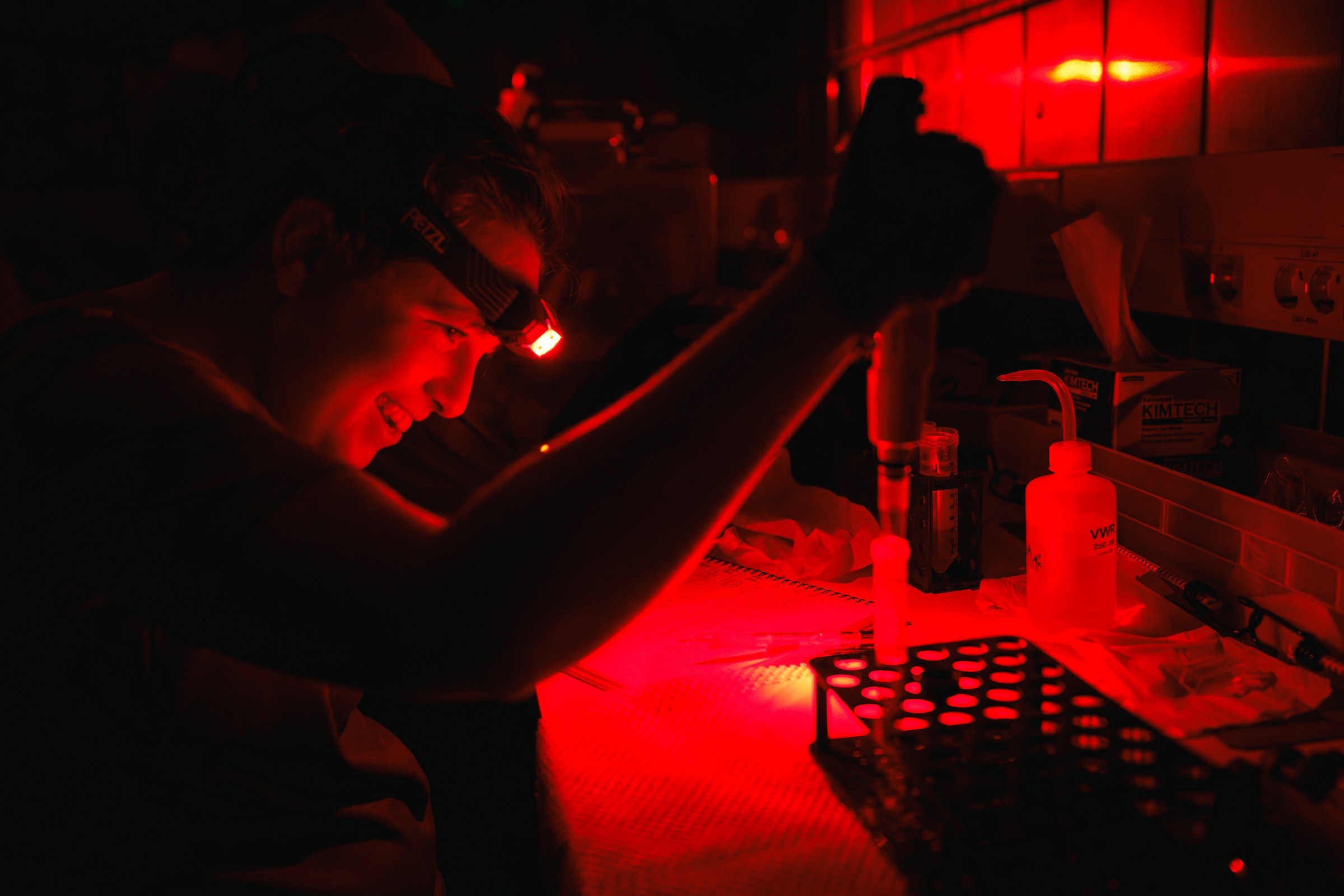
“All of the conditions necessary for life in the Ocean are governed by physics,” said Schmidt Ocean Institute’s Executive Director, Dr. Jyotika Virmani, “Expeditions like this address a major gap in our knowledge of ocean physics, gathering hard-to-measure data that are critical for understanding ocean mixing, which in turn improves computer models of larger ocean phenomena such as the Atlantic Meridional Overturning Circulation.”
# # #
About the Organizations
Schmidt Ocean Institute was established in 2009 by Eric and Wendy Schmidt to catalyze the discoveries needed to understand our ocean, sustain life, and ensure the health of our planet through the pursuit of impactful scientific research and intelligent observation, technological advancement, open sharing of information, and public engagement, all at the highest levels of international excellence. For more information, visit www.schmidtocean.org
Rutgers, The State University of New Jersey, is a leading national research university and the state of New Jersey’s preeminent, comprehensive public institution of higher education. Established in 1766, the university is the eighth-oldest higher education institution in the United States. More than 71,000 students and 27,000 faculty and staff learn, work, and serve the public at Rutgers University-New Brunswick, Rutgers University-Newark, Rutgers University-Camden and Rutgers Health.